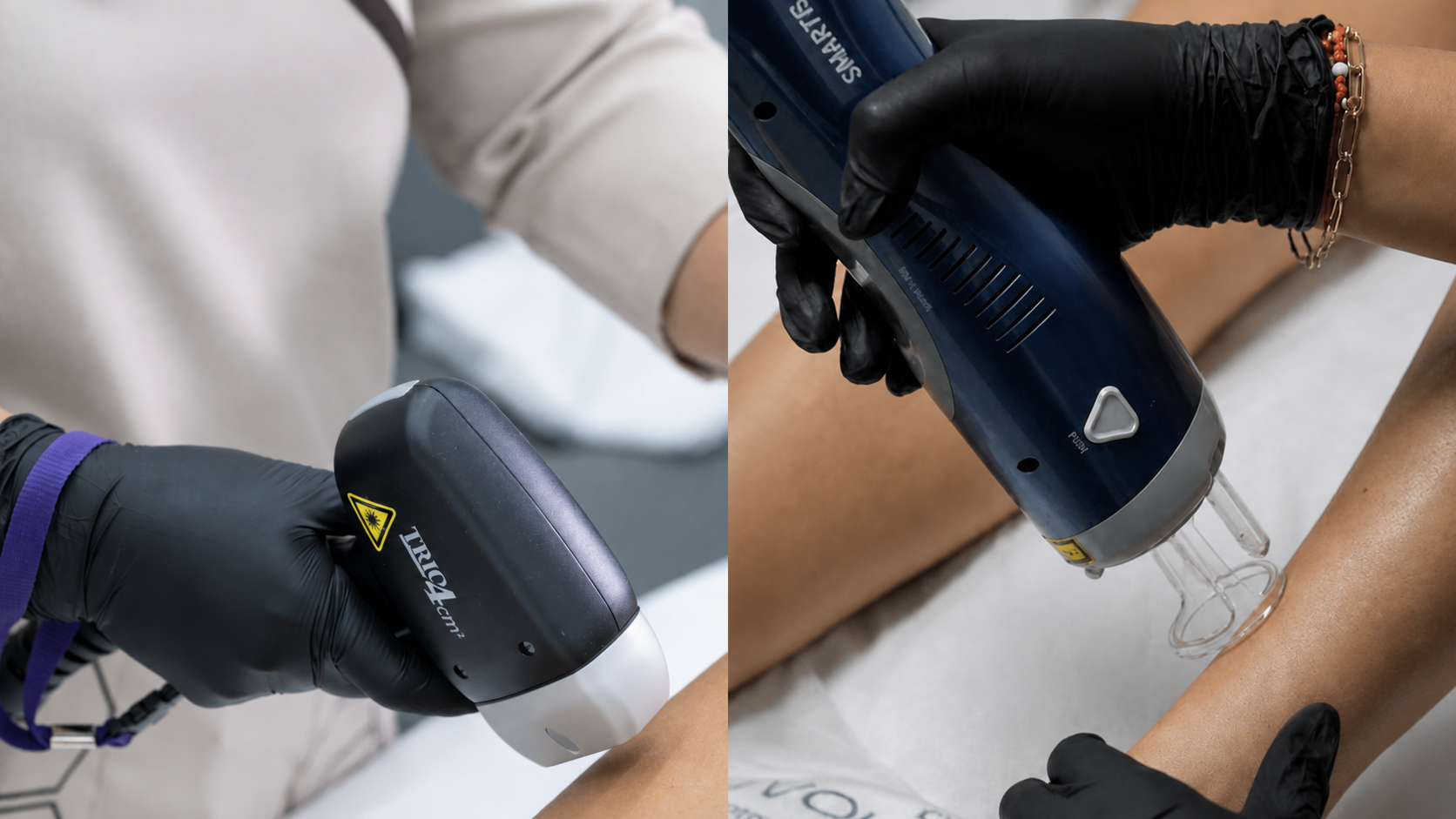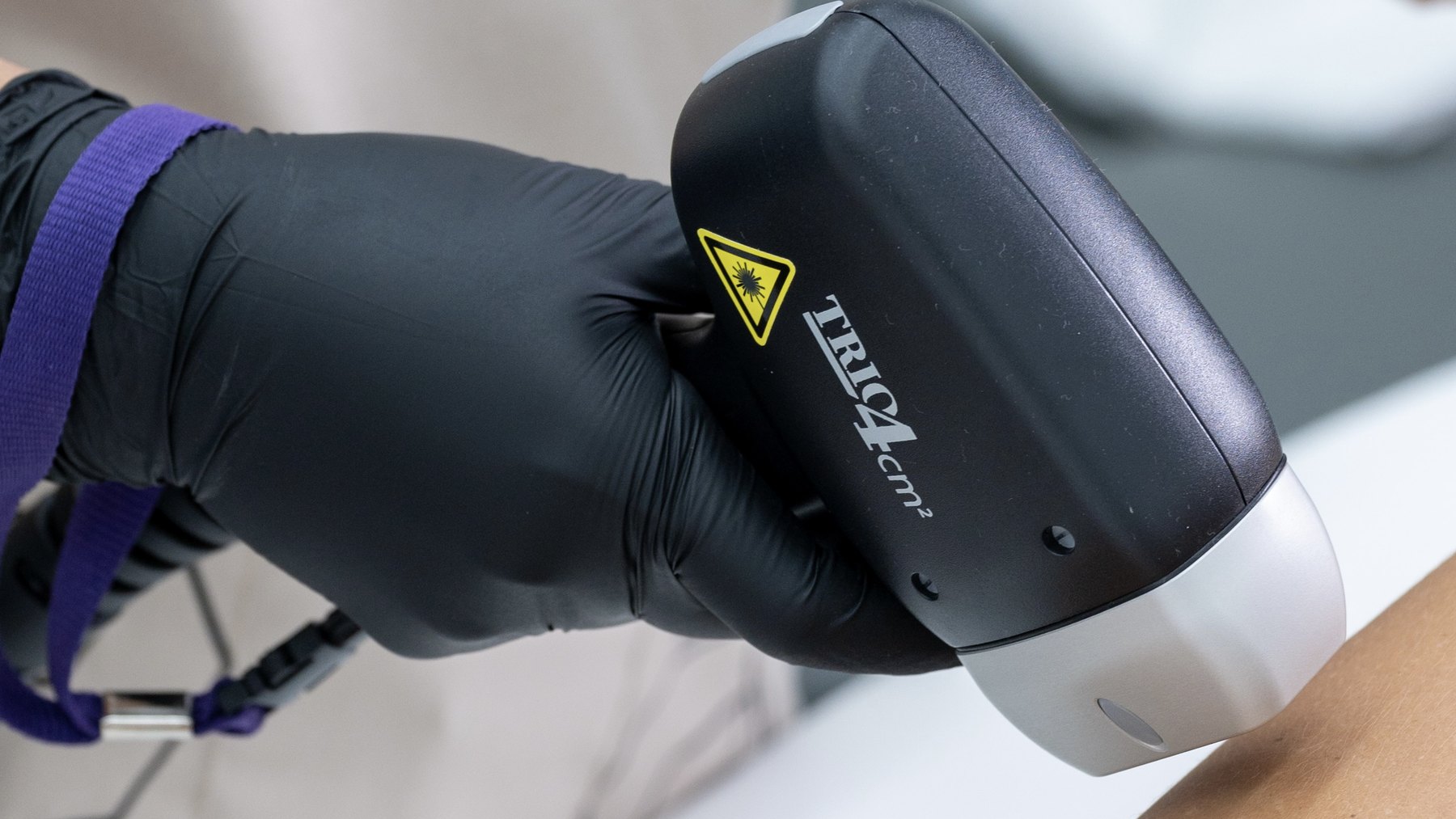
Laser hair removal can give long-lasting reduction, but it does not guarantee that every hair is gone permanently. Some people need maintenance after the initial course. A Soprano course is planned around your hair and skin response. We can discuss a starting plan at your assessment, but a fixed number of visits cannot guarantee the same reduction for everyone.
For general orientation, the American Academy of Dermatology says most patients need 2–6 laser treatments. Some areas and patients need more treatment or later maintenance; we set your Soprano plan after assessment. AAD laser hair-removal guidance.
Why one treatment is usually not enough
Laser hair reduction depends on hair pigment and growth activity. Not every hair in an area is at the same stage when you attend. Repeated treatments therefore form part of the process, rather than being a sign that the first appointment failed.
The American Academy of Dermatology describes a course of several treatments and possible later maintenance. Its examples are general guidance, not a promise for a particular Soprano package. Your body area, hair characteristics and response remain important. Read the AAD explanation.
Is laser hair removal permanent?
It is more useful to plan for long-term hair reduction than to promise lifelong removal of every hair. The AAD says that treated areas can stay hair-free for months or years, but regrowth and maintenance treatment are possible.
Less frequent shaving, fewer coarse hairs and slower regrowth can still be useful results even if an area does not stay completely bare. We agree the goal before starting rather than judge every course against a “never shave again” promise.
How long does laser hair removal last?
There is no fixed expiry date. Your treated area, hair characteristics and response influence the course and later maintenance. When hair does return, it may be finer and less noticeable. A new appointment is based on the regrowth and skin assessment, not automatically booked because a certain number of months has passed.
Record when you begin shaving more often again and which patches remain coarse. Bring that information to your review. If a new facial-hair pattern appears, we may recommend medical assessment rather than simply adding laser sessions.
What changes the plan?
At Evolution Clinic, we record which areas you want treated and ask what matters most to you: less frequent shaving, a defined beard outline or reduction across larger body areas. Those goals require different discussions.
Bring details of previous laser courses. Tell us whether you noticed slower regrowth, patchy reduction, persistent irritation or little change. This helps us review the previous response rather than simply repeat a session count. New facial hair or a changing growth pattern may need a medical assessment as well as a cosmetic plan.
How to judge progress
Compare the same area under similar conditions. How often you shave and whether the remaining hair is finer can be more useful than judging a photograph taken immediately after shaving. At follow-up, we review reduction alongside skin tolerance.
If results are limited, we discuss the likely reasons and whether the plan should change. Buying more visits is not automatically the right answer. We do not promise that increasing the settings or shortening the gap will improve your result.
Planning a package and future maintenance
Confirm what each visit covers before booking a package. A half-body service is a defined group of areas; it is not half the time of a full-body appointment.
Tell us about travel and sun exposure before scheduling. A safe date may be later than the date you originally wanted. If hair returns after the initial course, we assess whether maintenance is appropriate rather than treating it as an automatic calendar commitment.
Our Soprano treatment page explains the available areas and booking process.
For skin reactions and appointment preparation, read Soprano preparation, side effects and aftercare. For device choice, see Soprano versus Alexandrite.