

01
1 session
A brighter-looking complexion and more even surface texture.
Evolution Aesthetics Clinic
Texture, tone and fine lines
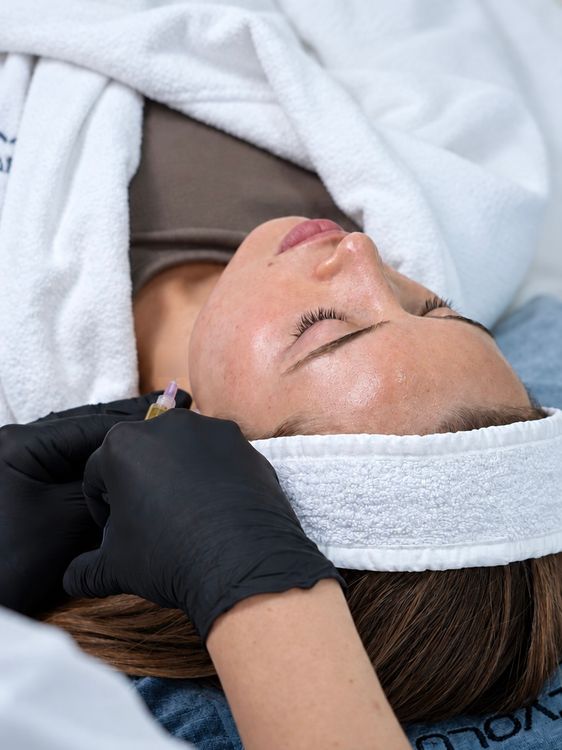
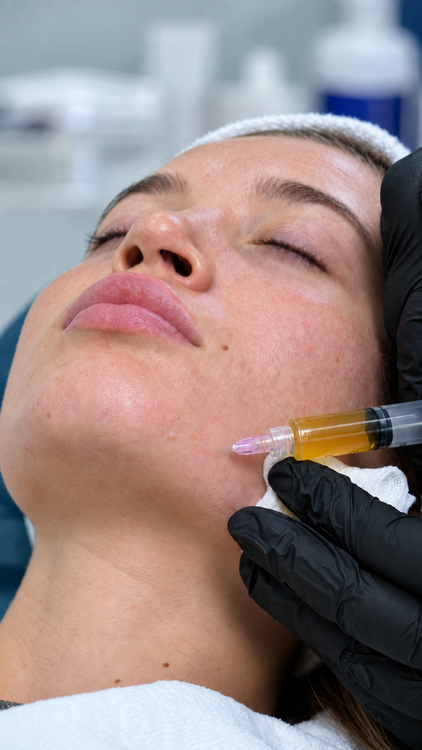
A PRP facial uses platelet-rich plasma prepared from a small sample of your own blood. We draw the blood into a sterile Eclipse PRP tube, spin it to separate the platelets from red cells, and inject the concentrate into the skin of the face, neck or décolletage.
Platelets release growth factors that stimulate fibroblasts, the cells that make collagen. Trials report smoother texture, brighter tone and softer fine lines. PRP does not add volume, lift sagging skin or replace a filler.
At Evolution Clinic in Jumeira, our doctors assess your skin and choose the areas and course.
key facts
Best for skin quality concerns, not for volume loss or deep folds.
Your appointment
Your doctor examines your skin, reviews your medical history and medicines, and agrees the areas. Numbing cream goes on while we draw a small blood sample.
The sample spins in the centrifuge for about ten minutes. Your doctor draws off the platelet-rich layer and injects it with fine needles across the agreed areas, or applies it over microneedled skin when that is part of your plan. Allow 45 to 60 minutes including numbing.
Expect redness, small bumps and possible bruising for a few days. Written aftercare covers washing, make-up, sun and exercise.
Real results
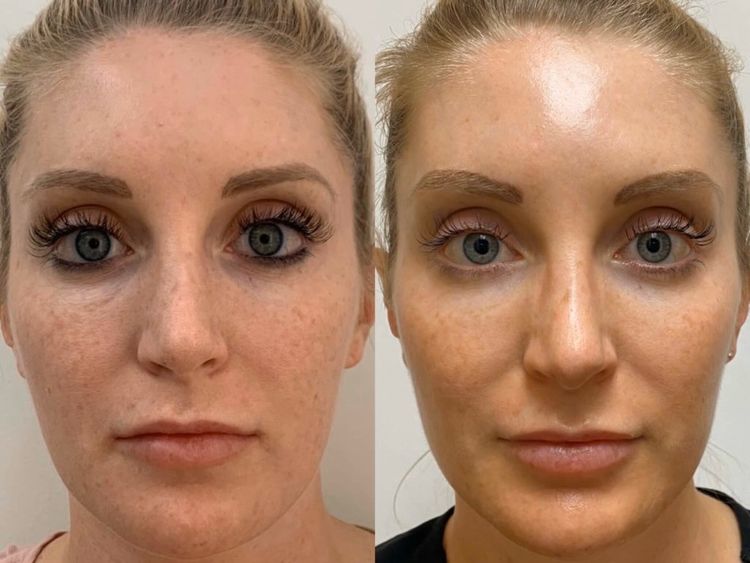
Individual patients after one session or a course. Your result depends on your skin, the areas treated and your response; photographs do not predict an identical outcome. Scalp examples are from PRP hair courses.
Individual results may vary.
A brighter-looking complexion and more even surface texture.
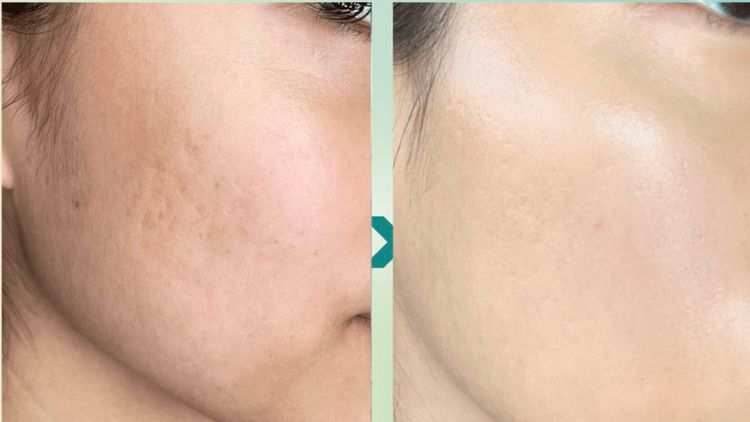
Smoother-looking cheek texture with softer visible irregularities.
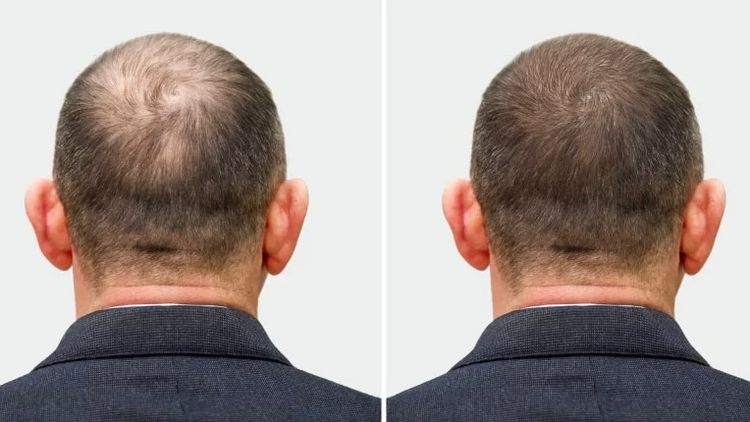
Denser-looking hair coverage and less visible scalp.
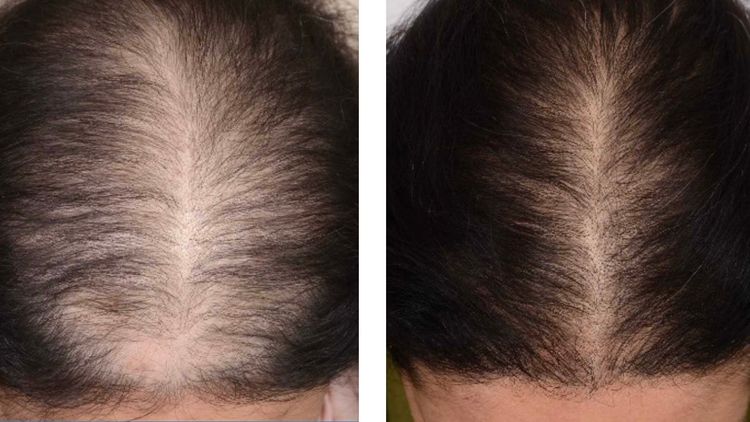
Fuller-looking hair coverage across the thinning area.
Questions
Yes. "Vampire facial" is the marketing name for PRP applied to the face, usually after microneedling. We offer both routes: injection of PRP into the skin with fine needles, or PRP applied over microneedled skin. Your doctor chooses by concern: injections for targeted fine lines and dull areas, microneedling with PRP for texture and acne scarring.
Typical plans use three sessions about four weeks apart. The American Academy of Dermatology reports that most patients who saw results needed three or more treatments, that full effects appear within weeks to months, and that they can last up to 18 months. Many patients then repeat one session every six to twelve months. We set the course at consultation and review it with photographs.
Eclipse PRP is a sterile single-use tube system with a separator gel. Blood is drawn straight into the tube and spun once; the gel holds the red cells below the platelet layer, so your doctor draws off plasma with few red cells and no exposure to open containers. Each kit is opened for one patient. It is listed with the US FDA as a platelet and plasma separator, and we explain what that listing covers before you consent.
Partly. A 2025 meta-analysis of nine randomised trials with 358 participants found higher patient satisfaction and objective improvement with PRP than with comparators, without more adverse events. Reviews also note small studies, no standard preparation and short follow-up. For acne scars, adding PRP to microneedling roughly tripled the odds of more than 50 percent improvement in a 2022 meta-analysis. We explain what this means for your concern.
Face, neck and décolletage, alone or face with décolletage in one visit. The neck and chest respond for crepey texture and sun damage; PRP does not tighten loose neck skin or fill deep chest lines. Scalp PRP for hair loss is a separate plan on our PRP hair treatment page.
Numbing cream is applied before the injections; most people describe brief stinging with each needle pass. The blood draw is an ordinary venepuncture. Tenderness is mild for a day or two afterwards; bruising can last longer, so plan the course around events.
Treatment guides
Our guide on PRP facial benefits explains what the trials show, why results vary between people and how to judge your own result.
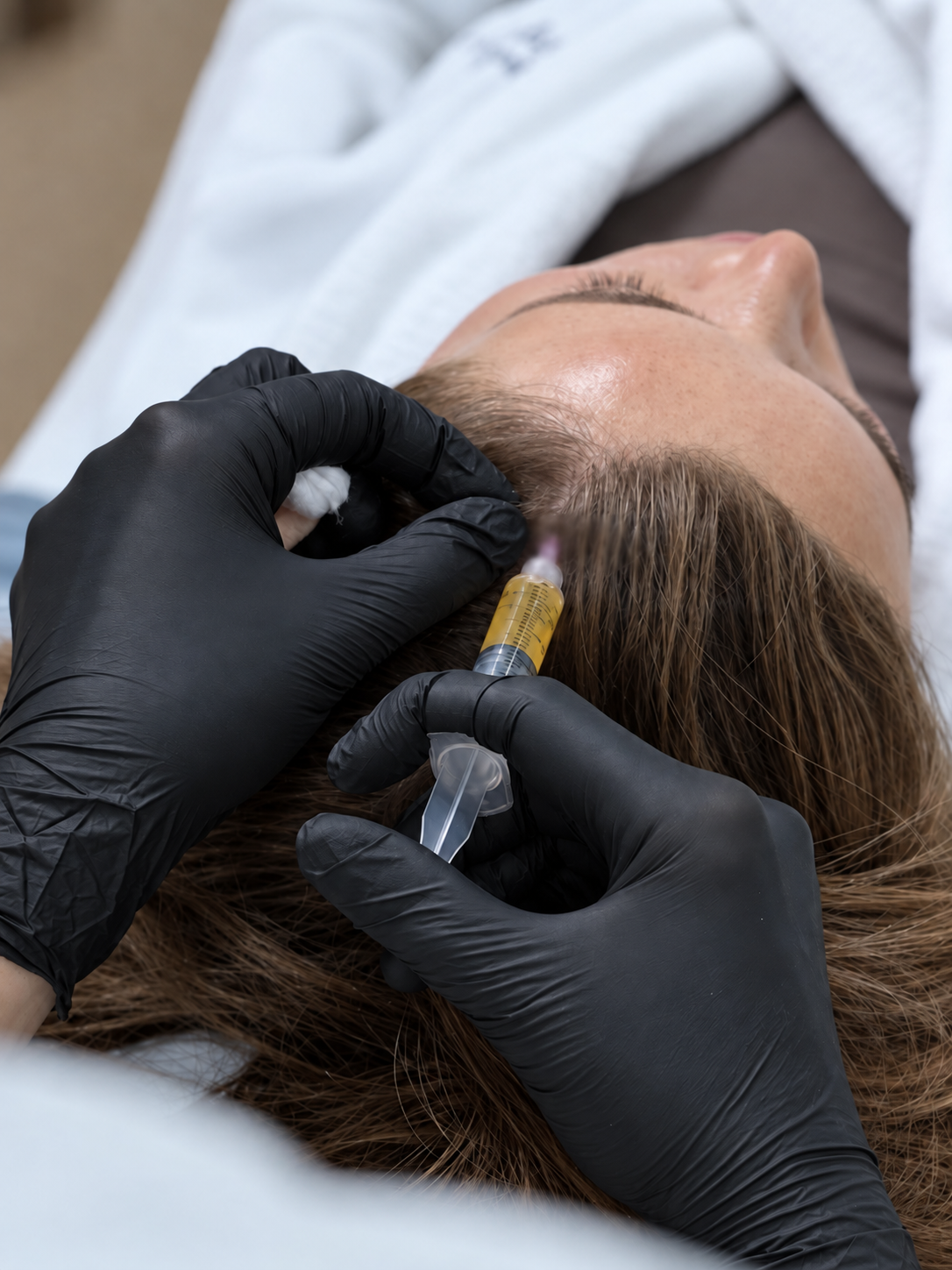
A clear guide to possible PRP facial benefits, mixed clinical findings, treatment routes and the limits of skin-rejuvenation claims.
Our licensed doctors assess your skin, prepare the plasma and perform every injection themselves, within their approved scope and clinical privileges.

Specialist Dermatologist
Medical Director of Evolution Clinic, Specialist Dermatologist from Russia, M.D., Official Trainer for Laser Technologies. DHA License 03624607-001
Meet Yulia
General Practitioner
General Practitioner at Evolution Aesthetics Clinic in Dubai. DHA License 39929792-001.
Meet VeraThe face is the most requested area: dull or uneven tone, rough texture, fine lines around the eyes and mouth, and shallow acne marks. A 2021 systematic appraisal of 36 studies with 3 172 patients found that about half addressed facial ageing and half acne scars, and all but seven reported significant improvement. PRP is injected into the dermis in small deposits across the area rather than into one line; a full face uses several millilitres spread over the cheeks, forehead, temples and around the eyes.
Crepey neck skin and sun-damaged chest skin have thin dermis and few oil glands, so they respond to collagen stimulation but heal more slowly. We treat the neck and décolletage as their own areas or together with the face in one visit. PRP improves texture and tone here; it does not tighten loose platysma bands or fill deep vertical chest lines, which need a different assessment.
We draw a small blood sample directly into a sterile, single-use Eclipse PRP tube that contains an anticoagulant and a separator gel. One spin in the centrifuge takes about ten minutes. The gel settles between the red cells and the plasma, so the platelet-rich layer can be drawn off with very few red cells, which are the part of blood most associated with inflammation and bruising after injection. The kit is opened for one patient and discarded afterwards; nothing is pooled or stored. The larger Eclipse tube yields roughly twice the plasma of the standard tube, which matters when face and décolletage are treated in one visit.
Injected PRP places the concentrate in the dermis with fine needles. Microneedling with PRP creates thousands of shallow channels and applies the plasma over them; this is the "vampire facial" of social media. Trials show that adding PRP to microneedling improves acne-scar results and patient satisfaction compared with microneedling alone, with no increase in severe redness or swelling. Injection suits targeted fine lines and dull areas; microneedling with PRP suits texture and scarring across a whole area. Your doctor recommends one, or combines them, after examining your skin.
PRP does not add volume to hollow cheeks or temples, does not lift sagging skin and does not remove pigmentation. Deep folds need a filler assessment, laxity needs energy-based tightening, and pigment needs its own diagnosis. We say this at the consultation so that a PRP course is booked for the concern it can change.
A Restylane skin booster injects stabilised hyaluronic acid that holds water in the dermis; hydration and smoothness come from the product itself and last while it remains. PRP adds no material; the effect depends on your own cells responding to growth factors. Boosters give a more predictable hydration change; PRP suits people who prefer an autologous treatment or want to add collagen stimulation. The two can be alternated in one plan.
SkinPen microneedling can be combined with PRP in the same session for texture and acne scarring. Morpheus8 RF microneedling adds radiofrequency heat for deeper scars and mild laxity; PRP can be applied afterwards, but the heat-based treatment does the structural work. We do not book PRP as a substitute for either when the concern is laxity.
A HydraFacial two to three days before, or first on the same day, clears oil and dead cells so the plasma meets clean skin. LED therapy straight after PRP, or within 48 to 72 hours, helps settle redness. Zionic radiofrequency tightening works on existing collagen with heat and can alternate with PRP sessions two to four weeks apart when firmness is also a goal.
Our facial exosome treatment uses a manufactured preparation applied after microneedling; PRP uses your own platelets. Some plans layer the two on alternate visits when the response to PRP alone is mild. The evidence for exosomes in skin is newer and smaller than for PRP, which we explain before combining them.
Scalp PRP uses the same Eclipse preparation but different injection spacing, depth and session numbers. Read our PRP hair treatment page for hair-loss plans.
Drink water normally in the days before; a well-hydrated blood sample separates better. If you take ibuprofen, naproxen or high-dose aspirin for pain rather than on prescription, stop them five to seven days before the visit, because they reduce platelet activity. Never stop a prescribed blood thinner or any other medicine on your own; tell us what you take and your doctor will decide. Limit alcohol for 24 hours before. Arrive with a clean face and no make-up.
Tell us about pregnancy or breastfeeding, blood or platelet disorders, autoimmune disease, diabetes, cancer treatment, skin infection or cold sores, keloid scarring and isotretinoin use in the last six months. We review this before deciding whether and how to treat.
Do not touch or wash the treated skin for 8 to 12 hours. No make-up for 24 hours. Skip heavy exercise, sauna and hot baths for 24 hours, and avoid ibuprofen-type painkillers for 24 to 48 hours; paracetamol is fine. Pause retinoids, acids and scrubs for three to five days, then resume gently. Use SPF 30 or higher and keep out of strong sun for 72 hours.
Redness and small bumps settle within a day or two; bruises can take a week. Texture and glow usually improve over four to six weeks. Collagen remodelling continues for three to six months, which is why we photograph you before the course and again at the review, not after the first session. The American Academy of Dermatology reports that effects can last up to 18 months; many patients repeat a single session every six to twelve months.
Book your first session at least a week before an important event, and finish a course a month before a wedding or photoshoot so that bruising, dryness and peeling are behind you.
Evolution Aesthetics Clinic holds DHA Polyclinic License 6000514. Our doctors work within their licensed scope and approved clinical privileges, assess you face to face before treatment, and prepare and inject the plasma themselves. Each session uses a new sterile Eclipse PRP tube, needles and syringes bought through official, authorized suppliers and meeting the UAE requirements for their category. Your blood never leaves the room and is never mixed with anyone else's. You receive written aftercare, and we are happy to show you the paperwork.
Eclipse PRP kits are listed with the US FDA as a platelet and plasma separator device. Cosmetic facial use is a doctor's decision outside that listed purpose, which is common for PRP and is one reason the American Academy of Dermatology describes the evidence for PRP skin treatment as limited: device rules do not require the large trials that medicines need. We explain this, and the trial evidence that does exist, before you consent.
Pain, bruising and swelling for a few days are the usual effects, along with redness and small raised points at the injection sites. Less common effects are infection when aftercare is ignored, cold-sore reactivation, temporary pigment darkening in darker or sun-exposed skin, and poor healing or keloid formation in people prone to it. An allergic reaction to the numbing cream is possible even though the plasma is your own.
Get medical help without waiting for a clinic reply if you develop hives, swelling of the lips or throat, wheezing or difficulty breathing. Contact us the same day for spreading redness, pus, fever, severe pain or a bruise that keeps growing.
We do not treat through active infection, inflammation, cold sores or open wounds in the area. Blood or platelet disorders, significant anaemia, current anticoagulant or antiplatelet therapy without your prescriber's clearance, uncontrolled diabetes or serious systemic illness, active cancer or current chemotherapy or radiotherapy, an autoimmune flare, pregnancy or breastfeeding, and a history of keloids or poor wound healing all mean we postpone or advise against treatment. The American Academy of Dermatology also lists hepatitis C, HIV, blood cancer, heart disease needing blood thinners and skin cancer in the area. Isotretinoin in the last six months rules out the microneedling route; the injection route is assessed case by case.
Questions
Not for 24 hours; the injection points need to close. After that, use clean brushes and a mineral SPF 30 or higher. Skip retinoids, acids and scrubs for three to five days.
Stop over-the-counter ibuprofen, naproxen and high-dose aspirin five to seven days before only if they are not prescribed. Never stop a prescribed blood thinner or aspirin without your prescriber; tell us and your doctor will assess bruising risk and whether to proceed.
No heavy exercise, sauna or hot bath for 24 hours; sweat and heat increase swelling and infection risk while the skin is open. Keep out of strong sun for 72 hours and use SPF 30 or higher every day of the course to limit pigment darkening.
The microneedling route waits six months after the last isotretinoin dose because of the healing and scarring risk. The injection route is decided case by case by your doctor. Tell us the drug, dose and stop date at the consultation.
At least a week before, and a month before a wedding or photoshoot for a full course. Bruising can last a week, and the texture change builds over four to six weeks. Tell us the date and we plan the sessions around it.
Related reading
Our other skin-quality treatments, and the professional and research sources behind this page.
