


Specialist Dermatologist
Dr. Yulia Krasnaya
Medical Director of Evolution Clinic, Specialist Dermatologist from Russia, M.D., Official Trainer for Laser Technologies. DHA License 03624607-001
Meet YuliaEvolution Aesthetics Clinic
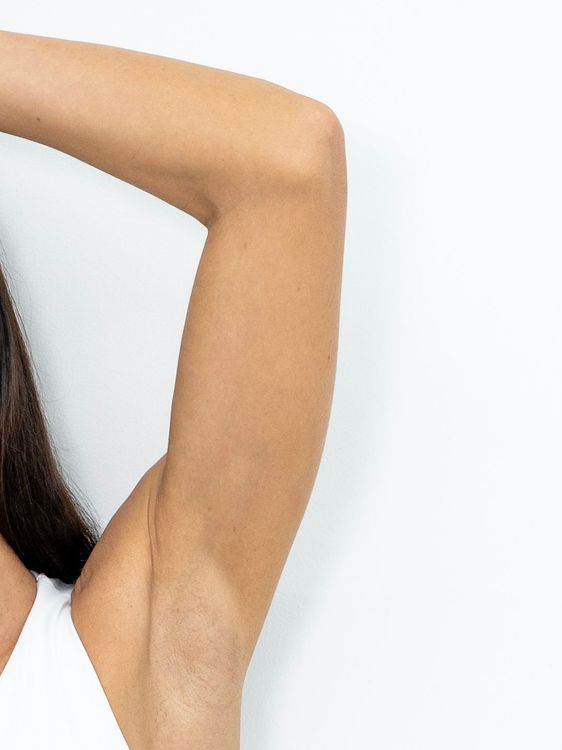
Excessive underarm sweating
Sweat glands switch on when nerves release acetylcholine. Small injections of botulinum toxin just under the skin block that release in the treated area, so the glands there stop responding. Botox is licensed for severe underarm hyperhidrosis that antiperspirants have not controlled.
The effect is local. It does not change how your body controls temperature, and sweating elsewhere continues.
At Evolution Clinic in Jumeira, our doctors first check whether a medicine or a medical condition is driving the sweating, then map the sweating area before injecting.
key facts
Best for underarm sweating that soaks clothes despite clinical antiperspirants.
Your appointment
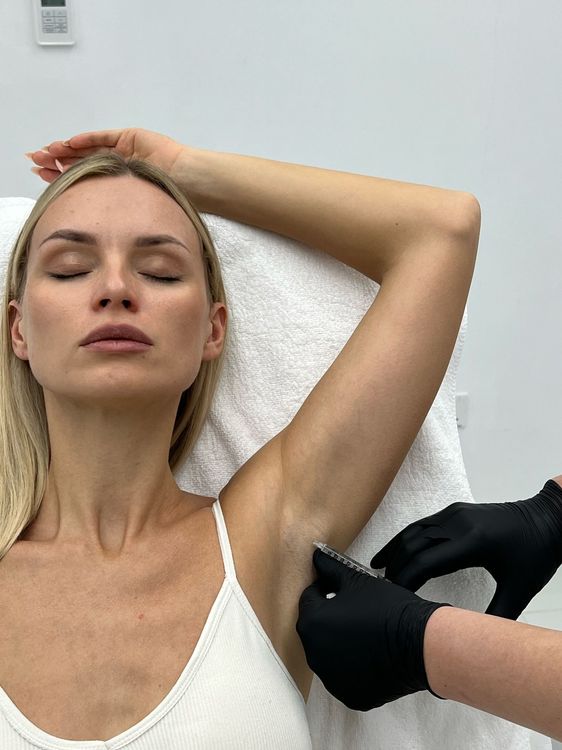
Your doctor asks when the sweating started, where it happens and what you have tried, and checks for a medical cause. If a blood test is needed, we arrange it before treatment.
On the day, the underarm is cleaned and, when useful, painted with iodine and dusted with starch so the sweating area turns dark. Your doctor marks a grid and gives 10 to 15 tiny intradermal injections per underarm. Numbing cream or ice keeps it tolerable. Allow 30 to 45 minutes.
You can go back to work straight away. Skip deodorant, heat and exercise for the first day.
Questions
In the licensing trials the median duration was 201 days, about 6.7 months, before sweating returned to its previous level. The American Academy of Dermatology gives 3 to 10 months for underarms and hands and 3 to 6 months for feet. Most patients repeat treatment once or twice a year; we decide the interval from when your sweating returns, not from a fixed calendar.
In a 320-patient placebo-controlled trial, 94 percent of the botulinum toxin group responded at four weeks against 36 percent of the placebo group, and 82 percent versus 21 percent at sixteen weeks. Underarm sweat typically falls by 82 to 87 percent. It does not reach zero, and a small number of people respond less; we review you at two weeks.
Yes, after a separate assessment: palms and soles are outside the licensed indication. Palm treatment is reported as 80 to 90 percent effective but needs more injections, hurts more and can weaken grip for a few weeks. Sole treatment has lower satisfaction in published reports. We explain these trade-offs and the off-label status before you decide.
Sometimes. Sweating that started recently, happens at night, affects the whole body or comes with weight loss, fever or palpitations can be caused by thyroid disease, diabetes, infection, menopause or a medicine such as an antidepressant. The NHS advises seeing a doctor when sweating has lasted six months, happens weekly or disrupts life. We check this history and order blood tests when needed before treating.
Botox is the brand licensed for underarm hyperhidrosis; Dysport and Xeomin are different botulinum toxin products used off-label for this purpose. We confirm the product and dose for your appointment and explain why it fits. Every vial is authentic, authorized for use in the UAE and bought through official suppliers.
Each underarm receives 10 to 15 very small injections with a fine needle just under the skin. Most people describe brief stinging; numbing cream or ice reduces it. Palms are more sensitive and may need a nerve block or stronger numbing. Soreness settles within a day or two.
Our licensed doctors assess the cause of your sweating, map the area and give every injection themselves, within their approved scope and clinical privileges.
Specialist Dermatologist
Medical Director of Evolution Clinic, Specialist Dermatologist from Russia, M.D., Official Trainer for Laser Technologies. DHA License 03624607-001
Meet Yulia
General Practitioner
General Practitioner at Evolution Aesthetics Clinic in Dubai. DHA License 39929792-001.
Meet VeraUnderarms, palms, feet or somewhere else: tell us the area and what you have tried. We reply fast on WhatsApp and are happy to talk on the phone.
Botox has been approved since 2004 for severe primary axillary hyperhidrosis that topical treatment has not controlled. The labelled dose is 50 Units per underarm, injected intradermally in 10 to 15 points about 1 to 2 cm apart across the area that the starch-iodine test shows. In the licensing trials about 80 percent of treated patients improved by two points on the Hyperhidrosis Disease Severity Scale, against about 35 percent on placebo, and the median time before sweating returned was 201 days. Our standard visit treats both underarms.
The sweating area rarely matches the hair-bearing skin. Painting the underarm with iodine and dusting it with starch turns the sweating skin dark within about ten minutes, so the injections cover the glands that matter and no dose is wasted on dry skin. We repeat the map at follow-up when a patch keeps sweating.
Palmar and plantar hyperhidrosis are off-label uses. Published reports give palms 80 to 90 percent effectiveness, but the hands need many more injections, discomfort is higher, and temporary weakness of grip or fine finger movements can last for weeks. Soles respond less predictably and satisfaction is lower. We treat palms only after discussing these effects and only when antiperspirants and iontophoresis have failed or are unsuitable.
Sweating of the forehead and scalp can also be treated off-label, with results lasting about four and a half months in the AAD's summary. Forehead injections can weaken nearby muscles and cause temporary eyebrow asymmetry, so the dose and placement follow a separate assessment.
Sweating falls within 7 to 10 days and is usually at its lowest by two weeks. The treated skin becomes dry rather than numb; sensation and hair growth are unchanged. When the effect wears off, sweating returns to its previous level; it does not rebound worse. Some patients notice slightly more sweating elsewhere, which the label lists as non-axillary sweating.
The NHS and the American Academy of Dermatology both start with clinical-strength aluminium-chloride antiperspirants applied at night to dry skin, then iontophoresis for hands and feet. Prescription anticholinergic wipes and oral medicines exist for widespread sweating but cause dry mouth and blurred vision in some people. We ask what you have already tried before recommending injections.
Secondary hyperhidrosis follows another condition or a medicine. Medical laboratory tests for thyroid function, glucose and infection markers are arranged when your history suggests one; treating the cause can remove the need for injections. A dermatologist consultation is the right starting point when the pattern is unusual.
Microwave thermolysis destroys underarm sweat glands permanently and surgical sympathectomy interrupts the nerve supply; both carry risks of their own, including compensatory sweating after surgery, and neither is offered at our clinic. Botulinum toxin is temporary and adjustable, which many patients prefer as a first step.
Soprano laser hair removal does not reduce sweat, but a hair-free underarm reduces odour-causing bacteria and makes mapping and injections easier. We schedule laser and injections on separate days.
Cosmetic Botox for expression lines, neck band treatment and migraine assessment use the same medicine for different reasons, with their own doses and risks. A sweating consultation does not establish that another area needs treatment.
Shave the underarms 12 to 24 hours before, not on the day, so the skin is calm. Do not apply antiperspirant or deodorant on the day: it interferes with the starch-iodine map. Avoid alcohol and strenuous exercise for 24 hours. Tell us about every medicine and supplement, especially blood thinners, aminoglycoside antibiotics and muscle relaxants, which interact with botulinum toxin. Do not stop a prescribed medicine on your own.
Bring details of any previous botulinum toxin treatment: date, product, dose and how long it lasted. That history sets the starting dose for your next visit.
Leave the area alone: no rubbing, massage or tight straps for the rest of the day. Skip deodorant for 12 to 24 hours and avoid hot showers, sauna, steam and heavy exercise for 24 hours. Small red points or bruises fade within days. You can work, drive and shower normally.
We review the result at about two weeks, when the effect is at its peak; a remaining sweating patch can be mapped and topped up then. Repeat treatment is planned when sweating returns to a level that bothers you, typically between 4 and 12 months. Each repeat is a fresh decision on dose and area, not an automatic booking.
Evolution Aesthetics Clinic holds DHA Polyclinic License 6000514. Our doctors work within their licensed scope and approved clinical privileges, assess you face to face and give every injection themselves. We use authentic botulinum toxin products authorized for use in the UAE, bought through official, authorized suppliers, and follow the required storage, reconstitution and handling instructions. You receive written aftercare and a review appointment, and we are happy to show you the paperwork.
Underarm treatment is a licensed use of Botox. Palms, soles, face and the other botulinum toxin products are off-label for sweating; where that applies we explain what it means and the evidence before you decide.
The label reports injection-site pain and bleeding, sweating elsewhere on the body, infection, sore throat, flu-like symptoms, headache, fever, neck or back pain, itching and anxiety in 3 to 10 percent of trial patients. Bruising and tenderness are common for a few days. Palm treatment can weaken grip temporarily; forehead treatment can cause eyebrow asymmetry. Tell us promptly about any unexpected or persistent symptom.
Botulinum toxin can, rarely, spread beyond the injected area. Get immediate medical help for difficulty breathing, swallowing or speaking, drooping eyelids, double vision, marked muscle weakness or loss of bladder control, even weeks after treatment. Swelling of the face or throat, hives or wheezing need emergency care. Do not wait for a routine clinic reply.
We do not inject through infected, irritated or inflamed skin, after recent surgery or a wound in the area, or when you are allergic to botulinum toxin or its components such as albumin. Pregnancy and breastfeeding, neuromuscular disorders such as myasthenia gravis, Lambert-Eaton syndrome or ALS, aminoglycoside antibiotics or certain muscle relaxants, and bleeding disorders or blood thinners all need review and may mean postponing treatment. We also postpone when the sweating pattern suggests an untreated medical cause.
Our Botox safety and side-effects guide explains these questions in more detail, and botulinum toxin brands and types explains the product differences.
Questions
Wait 12 to 24 hours so the injection points close and the skin is not irritated. After that, ordinary deodorant is fine; many patients find they no longer need antiperspirant while the effect lasts.
Not on the day of treatment. Heat and heavy exercise increase blood flow and can spread the toxin from the injection points; wait 24 hours. Walking, work and normal showers are fine immediately.
Yes, 12 to 24 hours before. Freshly shaved skin on the day is more irritated and stings more, while long hair hides the sweat map. If you have laser hair removal, book it on a different day.
No. The underarms carry a small share of the body's sweat glands, and only the treated area stops sweating. The rest of the skin continues to regulate temperature. Some patients notice mild extra sweating elsewhere, which usually settles.
Two to three weeks before, so the effect has peaked and any bruising has faded. That timing also lets us review you and treat a remaining patch before you go.
Related reading
Our other botulinum toxin treatments, and the regulatory and clinical sources behind this page.
Personalised consultation
A licensed clinician will review your goals, medical history, treatment options, expected results, and individual risks before you decide.
Umm Al Sheif Road 49, Dubai
Open every day · 9:00 to 21:00
