


Evolution Aesthetics Clinic
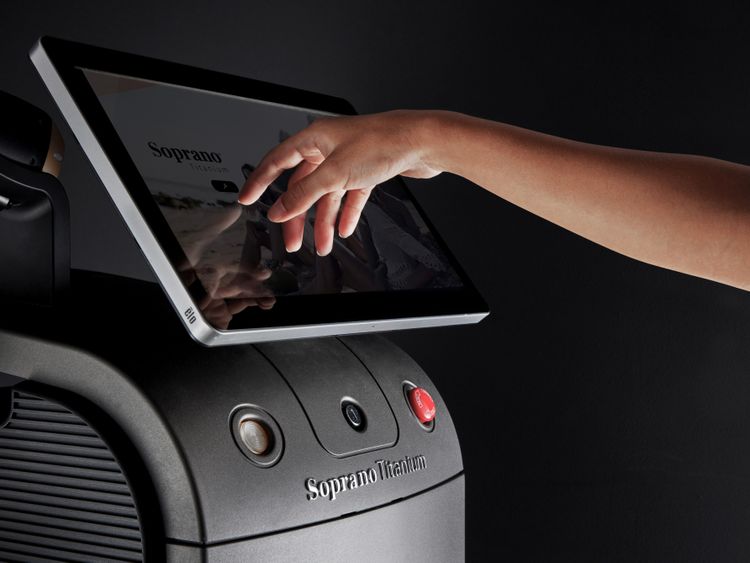
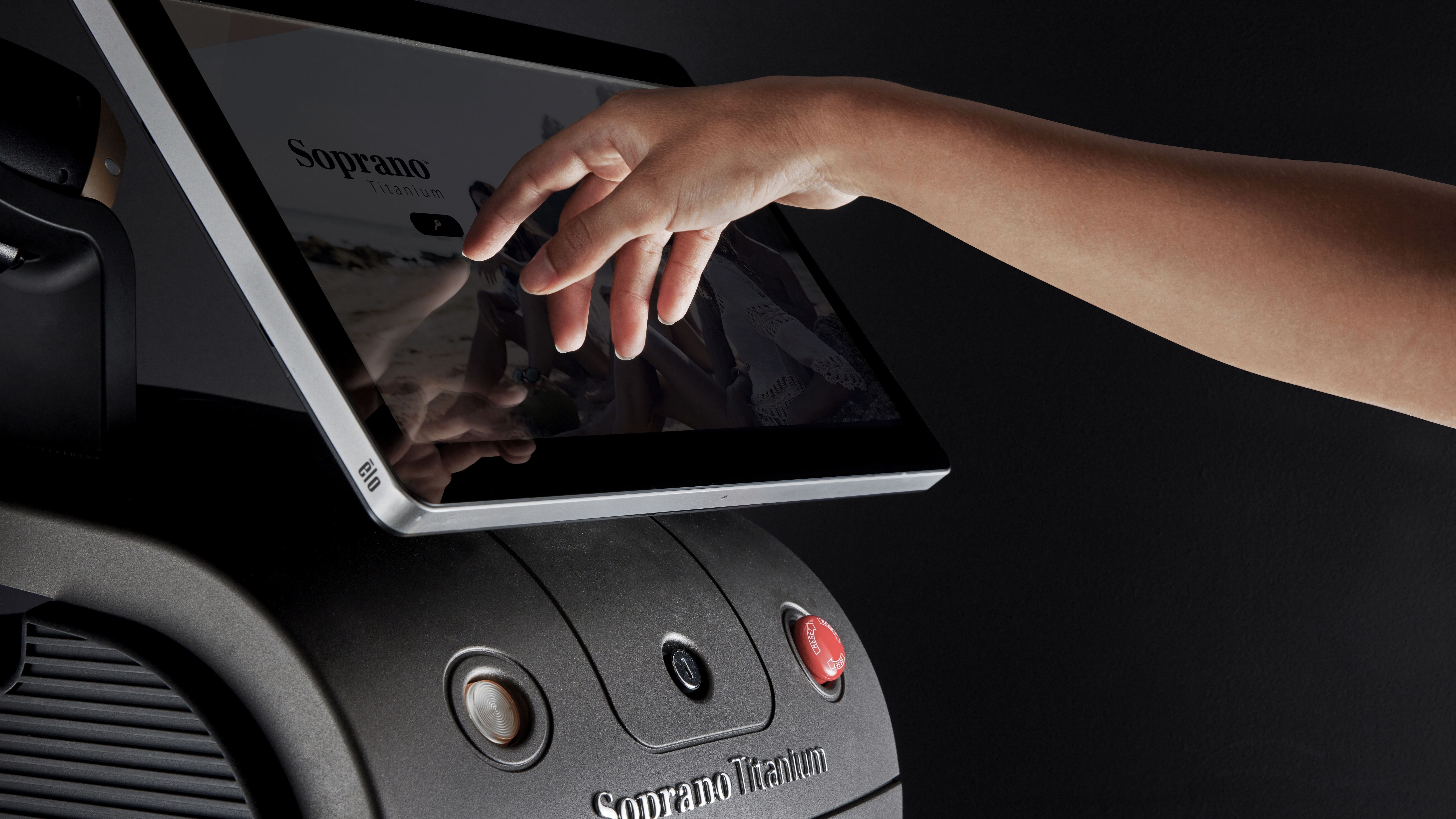
Soprano
Titanium Laser Hair Removal in Dubai
Package offers
Three wavelengths in one pulse
What does Soprano Titanium laser hair removal do?
Soprano Titanium is an Alma diode laser that emits 755, 810 and 1064 nm at once. Pigment in the hair absorbs the light, the follicle heats up and stops producing hair. Treated hairs shed over 1 to 2 weeks.
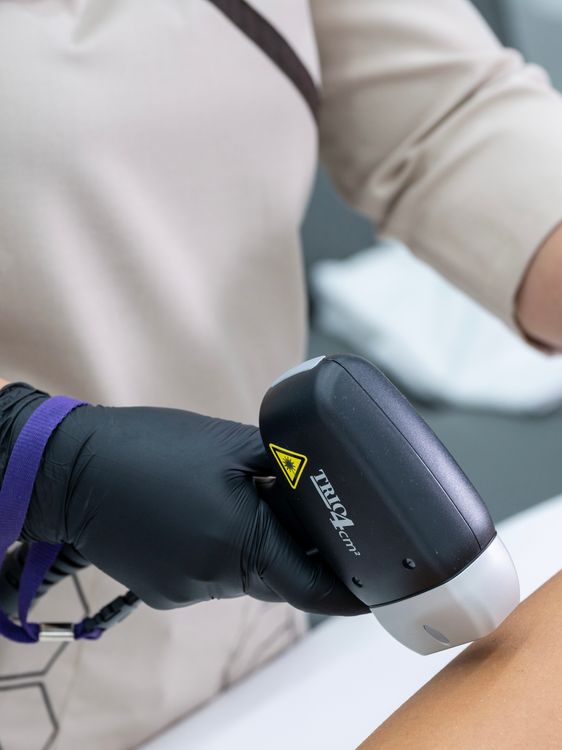
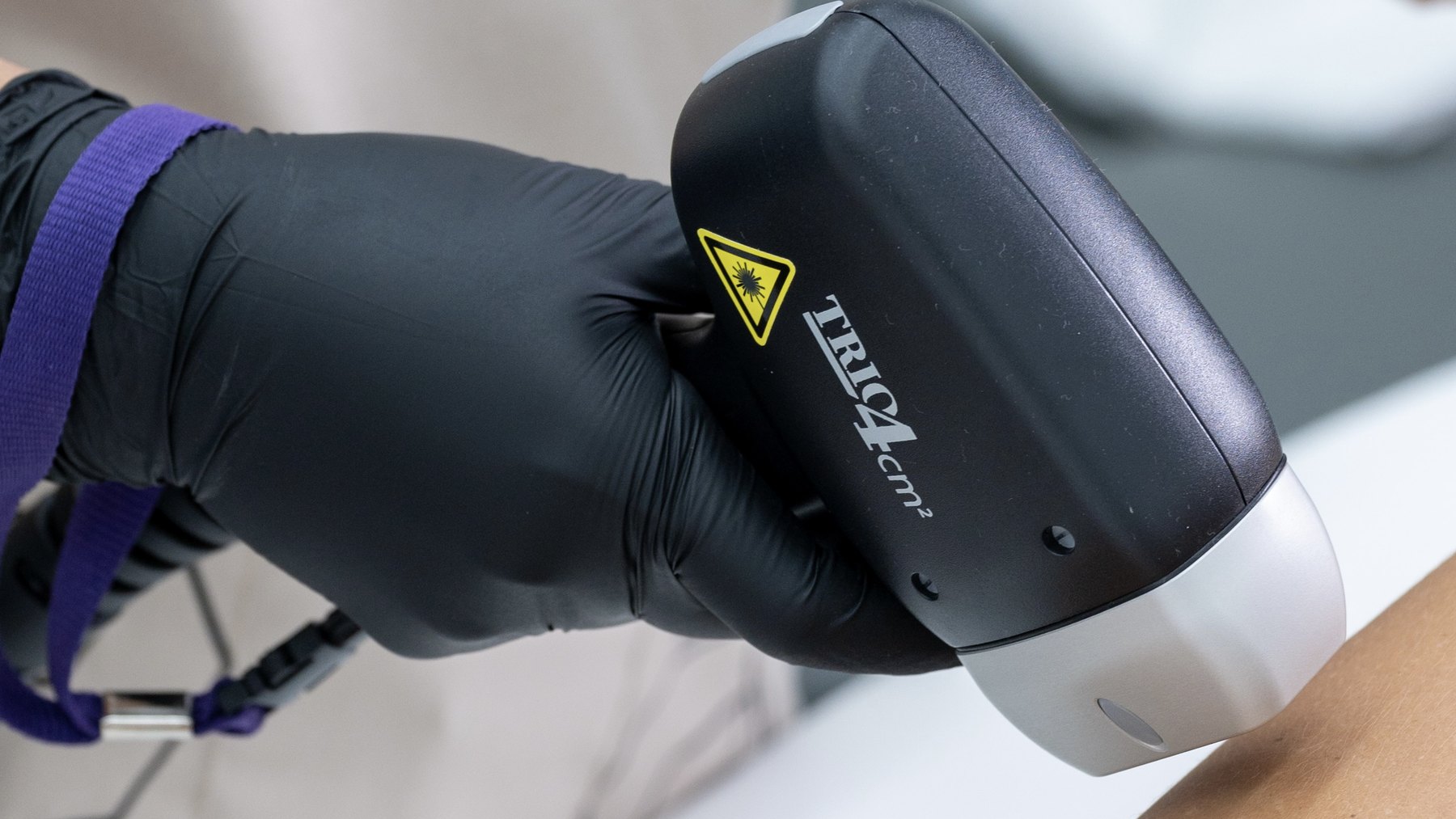
Instead of one strong flash per spot, the handpiece glides over the area firing low-energy pulses 10 times a second. The follicle warms gradually while a cooled sapphire tip keeps the skin surface cold.
Because the skin surface takes less energy per pulse, we can treat skin types I to VI and lightly tanned skin, all year round.
key facts
Is Soprano laser hair removal right for you?
Soprano is the laser we use for medium to dark skin, for tanned skin and for anyone who wants a gentler session.
- Skin types IV to VIMedium brown to dark brown skin. The 1064 nm share of each pulse passes skin pigment and heats the follicle deeper down.
- Tanned skin and summerA light tan does not stop a Soprano session. Sunburn does: we wait until the skin has fully calmed.
- Skin types I to IIIPale to light olive skin with dark hair clears in fewer sessions on our 755 nm Alexandrite. We offer you that laser first.
- Hair colourBlack and brown hair respond. Blonde, grey, white and red hair hold too little pigment; laser hair bleaching is the alternative.
- Sensitive to painLow-energy gliding pulses feel like building warmth, not a snap. A 25-patient split-leg study recorded significantly less pain.
- Not for everyoneWe postpone during pregnancy, breastfeeding, sunburn or an active skin infection in the area.
Your appointment
What happens during a Soprano laser hair removal session?
Shave 12 to 24 hours before. We grade your skin, mark moles and tattoos, pick the 2 cm² tip for face and bikini or the 4 cm² tip for legs and back, and set the energy.
The practitioner spreads cool gel and moves the handpiece in slow passes, 10 pulses a second, until the area reaches the target warmth. Upper lip takes 5 to 15 minutes, half legs 15 to 30, full legs 30 to 45, full body 60 to 90.
The skin stays pink for an hour or two. Work and make-up are fine the same day.
Real results
Soprano laser hair removal before and after
These photographs show our patients after 4 and after 8 Soprano sessions. Hair colour, skin type and hormones decide how fast your own course clears.
Individual results may vary.
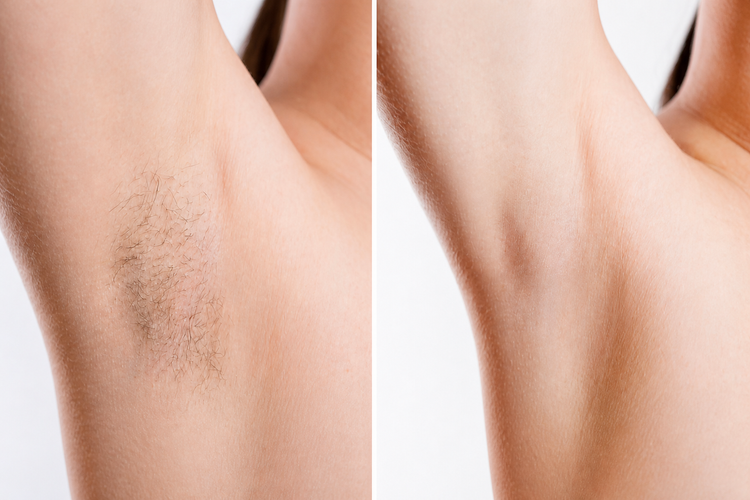
4 sessions
A marked reduction in visible hair after four sessions.
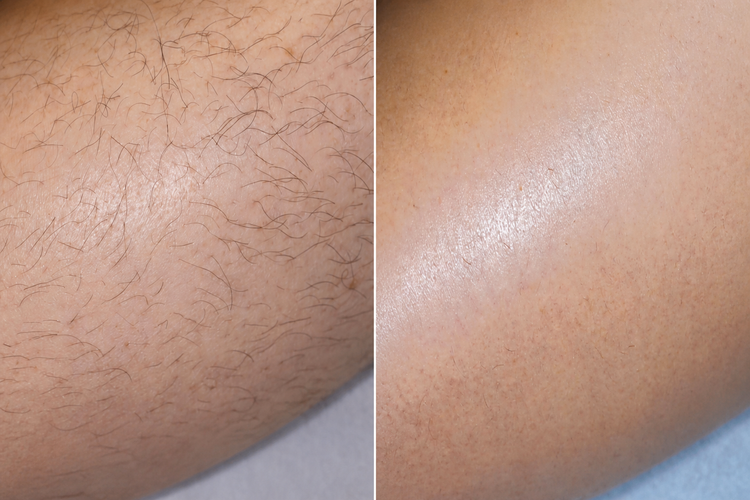
8 sessions
Much less visible hair after the eight-session course.
Questions
Questions before you book
How many Soprano sessions do I need?
Body areas usually need 6 to 8 sessions, 6 to 8 weeks apart. Facial hair grows in shorter cycles, so the face needs 8 to 10 sessions, 4 to 6 weeks apart. Hair sheds 7 to 14 days after each session; regrowth is patchier from the second or third visit. In a study on skin types IV to VI, 5 to 6 sessions at 1 to 3 month intervals gave high satisfaction with no complications. After the course, 1 or 2 maintenance sessions a year keep the area clear.
Is Soprano safe for dark skin?
Yes, and it is the laser we choose for skin types IV to VI. Dark skin contains more melanin, the same pigment the laser targets in the hair, so a high-energy single pulse can burn the surface. Soprano spreads the energy over many low-energy pulses while the sapphire tip cools the skin, and the 1064 nm wavelength passes through surface pigment. We still fire test pulses at the first visit and start at a lower setting.
Does Soprano laser hair removal hurt?
Most patients describe warmth that builds to a brief hot spot, then eases as the practitioner moves on. There is no elastic-band snap, because no single pulse is strong enough to sting. A split-leg study of 25 patients found the in-motion low-energy technique significantly less painful than a high-energy diode laser, with the same 86 to 91% hair reduction 6 months after the fifth session. Nobody needs numbing cream.
Can I have Soprano in summer or after a holiday?
Yes. Soprano is the laser we use all year, including on lightly tanned skin. The rules: no sunburn on the area, no sunbathing, sunbeds or self-tanner for 3 days before and 3 days after, and SPF 30 or higher on treated skin that sees the sun. If you arrive with peeling or sunburn we postpone that area, because damaged skin absorbs more energy.
What is the difference between Soprano and Alexandrite?
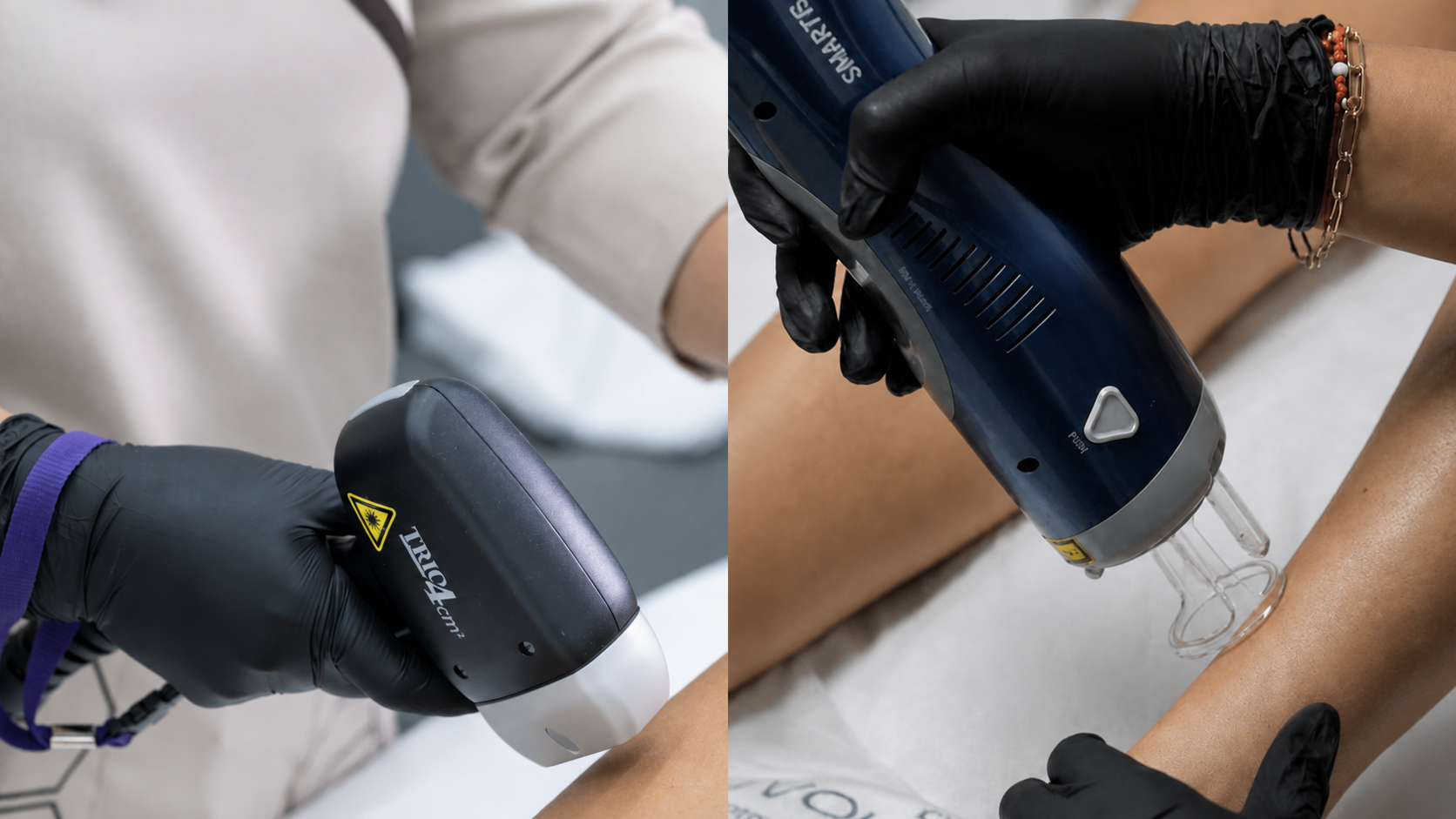
Both destroy the follicle with heat. Our Alexandrite (Smartrion) is a single 755 nm laser fired at high energy, pulse by pulse. Dark hair absorbs 755 nm strongly, so light to medium skin clears in fewer sessions. Soprano Titanium blends 755, 810 and 1064 nm at low energy in a gliding motion, which suits medium to dark and tanned skin and hurts less. On pale skin Soprano usually needs one or two more sessions. We recommend the laser that fits your skin, not the more expensive one.
What is included in half body and full body?
Your practitioner prepares an individual plan after assessing your goals, treatment area and suitability.
Treatment guides
Read more about Soprano laser hair removal
Three guides for your next question: Soprano or Alexandrite for your skin, how many sessions your areas need, and preparation, side effects and aftercare.
Soprano preparation, side effects and aftercare
Good preparation starts before your Soprano appointment. Tell us about recent sun exposure, medicines and previous skin reactions so that we can decide whether to treat, adjust the plan or wait.
Is Laser Hair Removal Permanent? Soprano Sessions
Learn how long laser hair reduction can last, why a course is needed and when Soprano maintenance may help.
Soprano or Alexandrite: choosing a hair-removal laser
Soprano and Alexandrite both reduce unwanted hair, but they do not deliver laser energy in the same way. At Evolution Clinic, we choose your treatment after checking the hair, the skin and the area you want treated.
Our Soprano laser hair removal practitioners
Our DHA-licensed laser practitioners work within their approved scope. Each one grades your skin on the day and sets the Soprano energy for your skin and area, not from a chart.
Laser Therapist/Nurse
Mary Grace Zepeda
Laser Technician, Registered Nurse. DHA License 00096717-003.
Meet Mary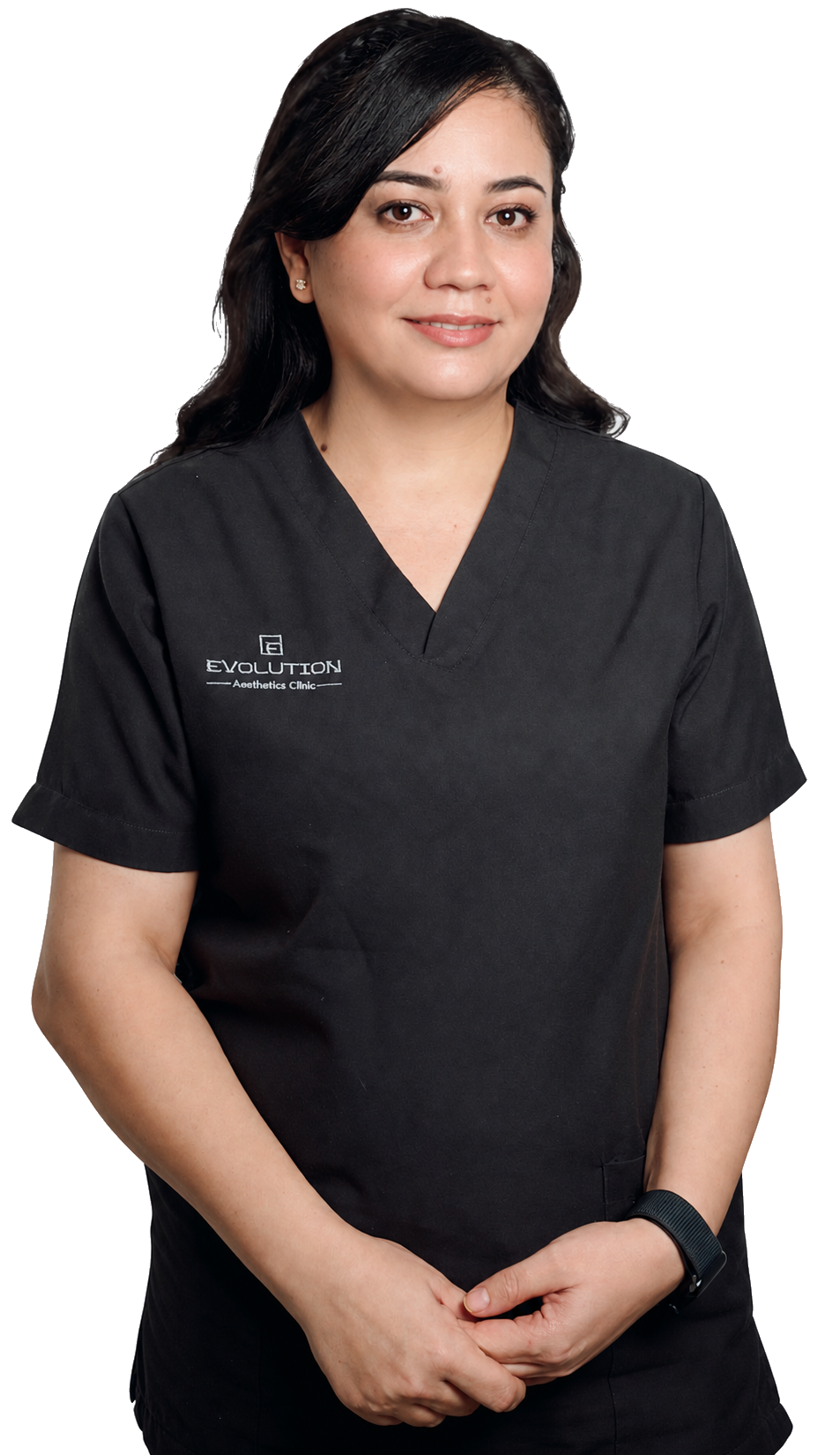
Beauty / Laser Therapist
Parvina Khalikova
Beauty / Laser Therapist at Evolution Aesthetics Clinic in Dubai. DHA License 18088356-004.
Meet Parvina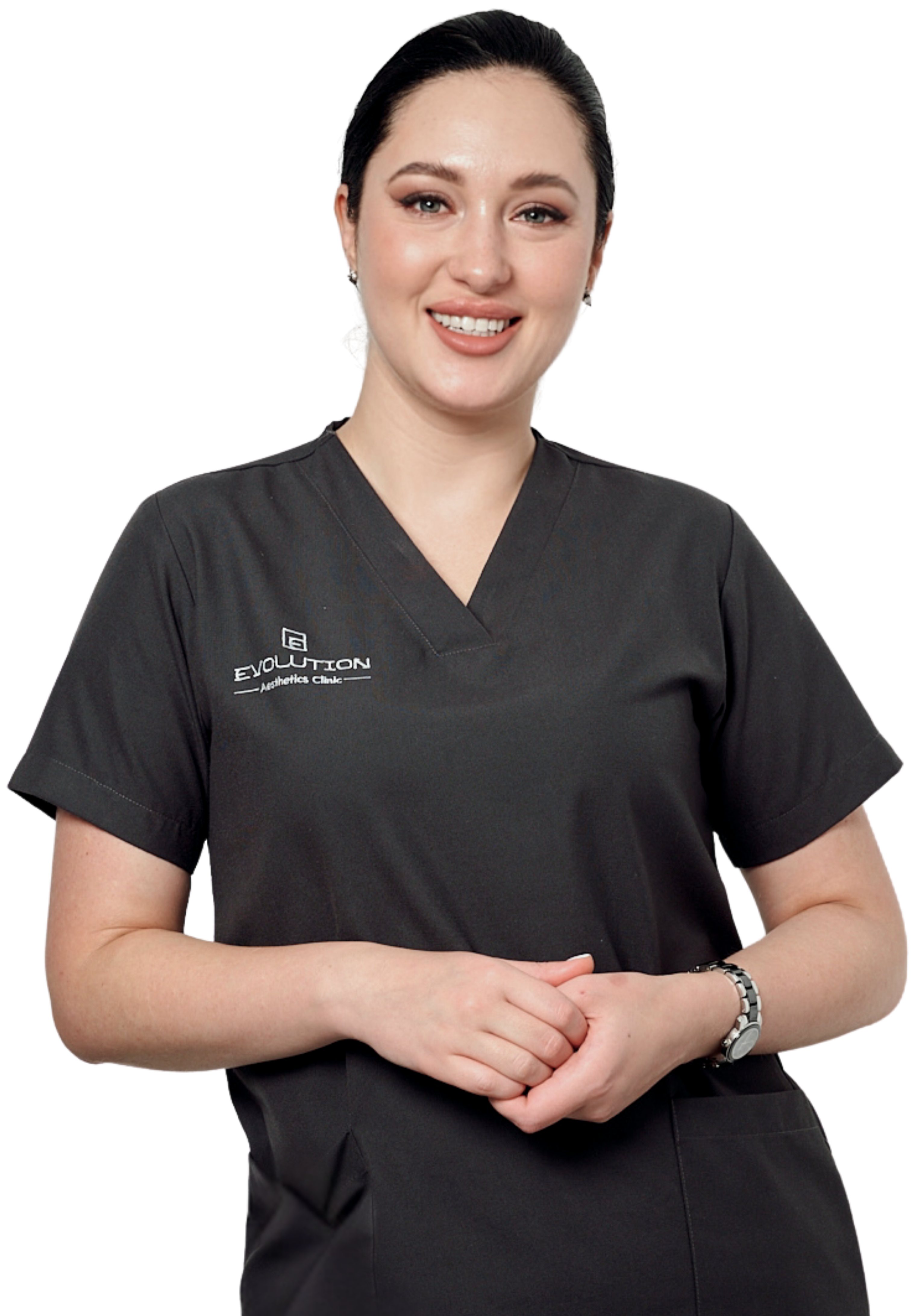
Beauty / Laser Therapist
Svetlana Lialenko
Beauty / Laser Therapist at Evolution Aesthetics Clinic in Dubai. DHA License 26039880-002.
Meet SvetlanaChat with us or give us a call
Tell us which areas you want treated and your skin type. Open every day, 9:00 to 21:00.
Soprano laser hair removal by area
Half body: our most booked laser session
The three areas share the same rhythm of 6 to 8 sessions, 6 to 8 weeks apart, so they fit one course. Underarms and bikini have coarse, dark hair on skin that rarely sees the sun and respond fastest; most patients see a clear reduction after two or three sessions. Lower legs have coarser hair than the thighs and clear faster too.
Full body
A full body session takes 60 to 90 minutes on Soprano; the 4 cm² Trio handpiece covers legs, back and arms in gliding passes, and we switch to the 2 cm² tip for underarms, bikini and face.
Underarms and bikini
These are the areas where daily life changes most: no shaving rash, no ingrown hairs, no dark shadow. The skin of the full bikini is darker than the thighs, so we use the small tip and the SHR STACK mode, which keeps the handpiece still and delivers several low-energy pulses to one spot instead of gliding.
Face: upper lip, chin, cheeks and temples
Facial hair has a short growth cycle, so we book face sessions 4 to 6 weeks apart and expect 8 to 10 in total. Chin and jaw hair in women is often hormonal, linked to polycystic ovary syndrome or the years around menopause; the treated follicles stay destroyed, but hormones can activate new ones, so this area needs maintenance two or three times a year. If chin hair appeared suddenly or is thickening fast, we recommend a hormone blood test with your doctor before you start.
Men: beard contour, neck, back, chest and shoulders
We agree the shape at the first visit because hair does not grow back in a treated area. Chest and abdomen hair sits close to the nipples and navel, where the skin is darker; we treat around them at lower settings.
Legs and arms
Legs are the area where a summer tan most often interrupts a course on other lasers. On Soprano a light tan is not a reason to postpone, so a leg course started in May can keep its 6 to 8 week gaps through the summer.
Soprano Titanium compared with Alexandrite and other lasers
What the three wavelengths do
Every hair removal laser works the same way: melanin in the hair absorbs the light, turns it into heat, and the heat destroys the follicle. The wavelength decides how deep the light goes and how much of it the skin surface absorbs on the way. Soprano Titanium emits three wavelengths in each pulse:
- 755 nm is absorbed most strongly by melanin. It works on finer and lighter-brown hair and on shallow follicles. - 810 nm is the standard diode wavelength, a balance of absorption and depth that suits most hair and skin types. - 1064 nm is absorbed least by skin pigment and reaches deepest. It is the reason Soprano can treat skin types V and VI.
In-motion low-energy delivery
A classic hair removal laser fires one strong pulse of 25 to 40 J/cm² per spot. Soprano's SHR mode fires 5 to 10 J/cm² pulses at 10 Hz while the handpiece keeps moving, so each follicle is heated gradually over several passes instead of shocked once. The ICE Plus sapphire tip cools the skin surface throughout, so the epidermis stays cold while the follicle in the dermis reaches the damaging temperature.
Two published comparisons matter here. A randomised split-leg study of 25 patients with skin types I to V (Braun, 2009) found 86 to 91% hair reduction six months after the fifth session with both the low-energy in-motion diode and a high-energy diode; the in-motion side was faster, significantly less painful, and the only burn occurred on the high-energy side. A split-axilla study of 49 patients (Wanitphakdeedecha, 2012) found the in-motion diode less painful than a high-energy 1064 nm Nd:YAG laser, but with less hair reduction at six months (35.7% against 54.2%).
Which laser we choose for your skin
The Fitzpatrick scale grades skin by how it reacts to sun, not by ethnicity:
- Types I to III (very fair to light olive, burns before it tans): our first choice is the 755 nm Alexandrite laser, which puts the most energy into dark hair and clears these skin types in the fewest sessions. Soprano is the alternative if you want a gentler session or are tanned. - Type IV (medium brown, tans easily): either laser. Alexandrite at reduced energy after a test patch, or Soprano at standard settings. - Types V and VI (brown to dark brown): Soprano only. The 755 nm share is kept low and the 1064 nm share does the work. - Any tanned skin: Soprano. A tan raises the melanin in the surface for weeks; Alexandrite waits 2 to 4 weeks, Soprano does not.
Our guide Soprano or Alexandrite: choosing a hair-removal laser covers the decision in more depth.
Hair colour
The laser needs pigment in the hair. Black and dark brown hair responds best, medium brown well, light brown partially. Blonde, grey, white and red hair contain little or no eumelanin and do not respond to any hair removal laser, whatever the manufacturer says about "all hair types". For those hairs we offer laser hair bleaching, which lightens the hair instead of removing it.
The device
Soprano Titanium is made by Alma Lasers. Our unit is an original device bought from the official UAE distributor, serviced on the manufacturer's schedule, and we can show you the paperwork. It carries the Trio applicators with 2 cm² and 4 cm² spot sizes and three delivery modes: SHR in motion for large areas, SHR STACK for small areas such as the face and bikini line, and classic single-pulse HR.
Preparation, aftercare and safety
Before your session
Bring your skincare product list so we can confirm what to pause and when to restart. Do not stop prescribed treatment without your prescriber’s advice.
Shave the area 12 to 24 hours before. Hair above the skin would absorb the laser and heat the surface, while a freshly shaved area keeps the energy in the follicle. Do not wax, pluck, thread or epilate for 3 to 4 weeks before a session or between sessions; these remove the root the laser needs.
No sunbathing, sunbeds or self-tanner for 3 days before, and no sunburn or peeling on the area at all. Stop glycolic or salicylic acid and scrubs on the area 2 to 3 days before. If you take a light-sensitising medicine, or St John's wort, tell us; we postpone the session until you have finished the course. A history of cold sores in the area means we ask you to take your antiviral before a facial session. Come without deodorant, perfume or body oil on the area.
After your session
Mild redness and warmth are normal and settle within a few hours. Cool the skin with a cold compress if it feels hot and use a plain fragrance-free moisturiser or aloe. For 24 hours avoid hot baths, saunas, steam rooms, hard exercise and swimming pools; for 3 days keep the area out of the sun and use SPF 30 or higher whenever it is exposed.
Treated hairs shed over 7 to 14 days and can look like regrowth as they push out. Do not pluck them; shaving is fine. Do not wax or epilate between sessions.
Side effects and when to contact us
Expected effects are redness, slight swelling around the follicles and a warm feeling for a few hours. The American Academy of Dermatology lists discomfort, swelling and redness lasting 1 to 3 days as the common effects of laser hair removal, and blistering, cold-sore flare-ups, infection, scarring and permanent skin colour change as the rare ones. The gradual-heating method lowers the peak temperature of the skin surface, which is why the published in-motion studies on skin types IV to VI recorded no burns or pigment changes, but a wrong setting on any laser can still injure skin. Very rarely, laser on fine facial or neck hair in darker skin triggers thicker hair growth nearby, called paradoxical hypertrichosis; we watch for it and change the approach if it appears.
Contact us the same day if you have blisters, pain that gets worse instead of better, or skin that looks infected. Tell us about any colour change before your next session, even if the area no longer hurts.
Who should not have Soprano laser hair removal
- Pregnancy and breastfeeding; we postpone the course. - Sunburn, peeling or a fresh deep tan on the area; we wait until the skin has calmed. - Active infection, open wounds, cold sores, eczema or psoriasis flares in the area. - Light-sensitising medicines that cannot be paused. - Tattoos and permanent makeup are never lasered over; we mark them and treat around them. - A history of keloid scars, light-triggered seizures, or a suspicious mole or skin cancer in the area; these need a doctor's assessment first.
Our care standards
Evolution Aesthetics Clinic holds DHA Polyclinic License 6000514. Our laser practitioners are DHA-licensed and work within their approved scope. The Soprano Titanium is an original Alma device from the official UAE distributor, and we are happy to show the paperwork. Our guides Soprano preparation, side effects and aftercare and How many Soprano sessions will I need? cover these points in more detail.
Questions
Preparation and recovery questions
Can I shave between Soprano sessions?
Yes. Shave whenever you like; it does not affect the result. Do not wax, pluck, thread or epilate, because the laser needs the hair root in the follicle. If the hair looks like it is growing back in the first two weeks after a session, it is usually the treated hair shedding.
When can I go to the beach after Soprano?
Keep the treated area out of direct sun for 3 days and under SPF 30 or higher after that. Sun on freshly lasered skin is the most common cause of dark patches. For the next session, a light tan is fine on Soprano; sunburn or peeling means we postpone that area until the skin has calmed.
Is the result permanent?
A destroyed follicle does not grow hair again. In the split-leg study, hair reduction was 86 to 91% six months after the fifth session. What remains is finer and lighter. Some follicles are only weakened, and hormones can wake dormant ones, so most people book 1 or 2 maintenance sessions a year. Nobody should promise you that every hair is gone forever.
Does laser hair removal help with ingrown hairs?
Yes, and it is one of the main reasons men book the beard contour and women the bikini and underarms. Ingrown hairs form when a shaved or waxed hair curls back into the skin. Once the follicle is destroyed there is no hair to grow in. Existing bumps and dark marks fade over the following months.
Related reading
Related treatments and medical sources
Other hair treatments we offer and the medical references behind this page.
Medical and regulatory sources
- Alma Lasers: Soprano Titanium, triple wavelength, ICE Plus and SHR technology
- Alma Lasers: Soprano product information
- AAD: Laser hair removal FAQs
- AAD: How to prepare for laser hair removal
- Braun 2009: low fluence high repetition rate versus high fluence 810 nm diode, split-leg study
- Agarwal 2016: low fluence high repetition rate 810 nm diode in skin types IV to VI
- Wanitphakdeedecha 2012: in-motion 810 nm diode versus 1064 nm Nd:YAG, split-axilla study
Personalised consultation
Discuss whether Soprano Laser Hair Removal is suitable for you
A licensed clinician will review your goals, medical history, treatment options, expected results, and individual risks before you decide.
Umm Al Sheif Road 49, Dubai
Open every day · 9:00 to 21:00