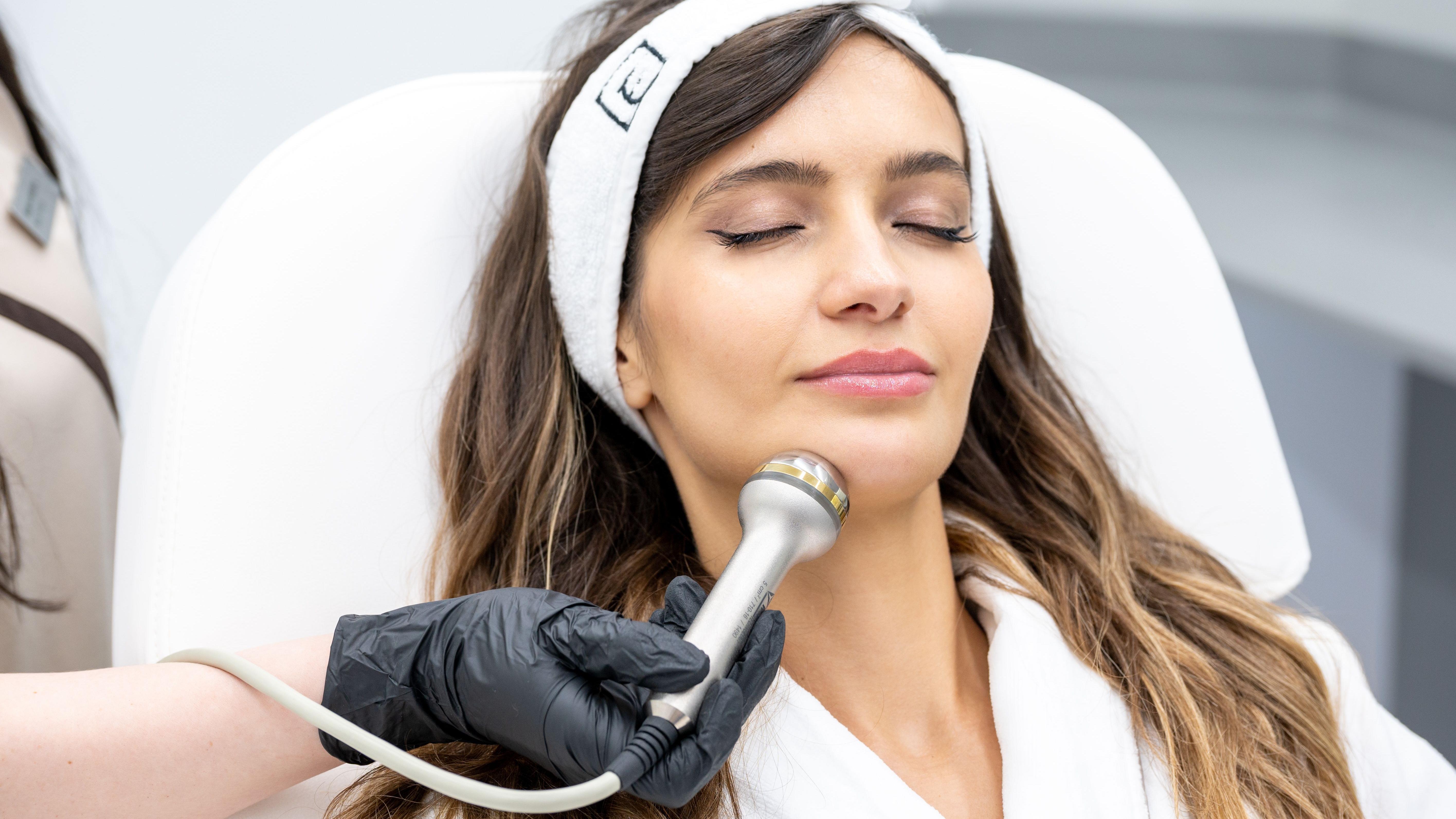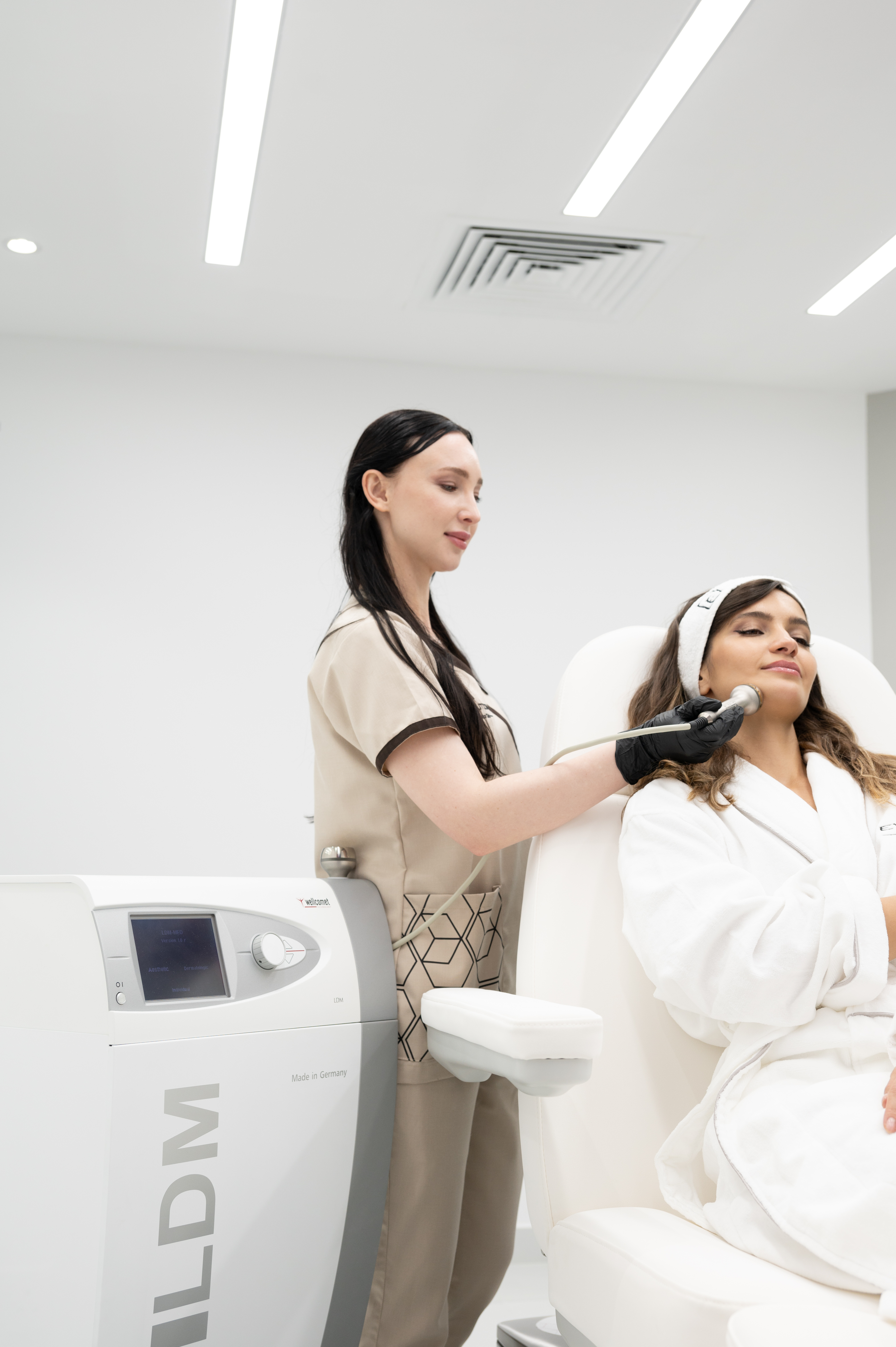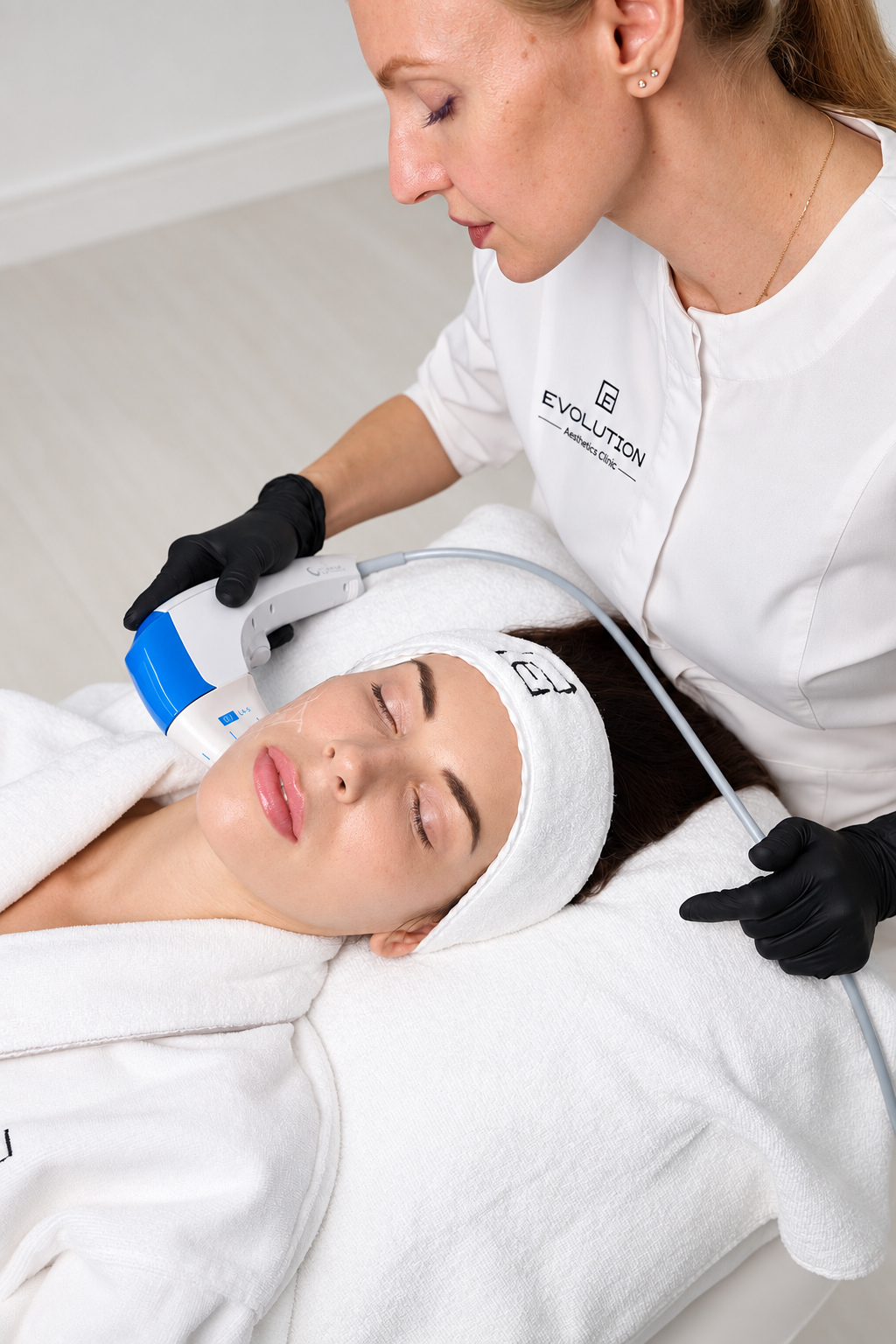
LDM and HIFU both use ultrasound, but they are different treatment approaches. LDM facial care should not be described as a gentler setting of HIFU or as producing the same lifting result.
Why does the distinction matter?
A technology name can hide important differences in how energy is delivered and what tissue response is intended. LDM uses a selected ultrasound programme across the treatment area. HIFU concentrates energy at defined depths for a focused tissue effect.
That difference changes the assessment, the expected benefit and the discussion of risk. Choosing treatment by the word “ultrasound” alone is like choosing a medicine without knowing what it is meant to treat.
Which concern are you trying to change?
A person who wants help with skin comfort or a refreshed appearance may have a different goal from someone seeking improvement in mild facial laxity. A rash or persistent redness can need a medical diagnosis. Marked loose skin or facial hollowing can make an energy-based tightening plan unsuitable.
We examine the skin and ask about the change you would consider worthwhile. We do not automatically recommend the more intensive option because the concern has lasted a long time.
How do the treatment discussions differ?
For an LDM facial, we explain the selected service, your skin condition and how the response will be assessed. For Ultraformer MPT face tightening, we discuss facial anatomy, volume and the intended focused-ultrasound effect.
The CLASSYS technology description and Wellcomet LDM overview describe different systems. These are explanations of technology, not proof that either is the right choice for every patient.
Is one risk-free?
No treatment should be offered with a universal safety guarantee. Your medical history, skin condition, implants and previous treatments matter. Focused ultrasound has risks that belong in its own consent discussion, including burns and unwanted volume change. A facial also needs review if it causes persistent pain or irritation.
Tell us what you have already tried and when. Do not plan both treatments on a fixed sequence without an assessment of the reason for each step.
What should I ask before deciding?
Ask which concern the proposed treatment addresses, what it is unlikely to change, how recovery will affect your plans and how progress will be measured. Understanding these points is more useful than comparing machine specifications alone.