iPixel recovery is a healing process, and the appearance of the skin can change from day to day. Redness, swelling, tenderness and crusting may follow treatment. The length of each stage depends on the area, settings and individual response, so a photograph labelled “day 3” cannot predict how everyone will look on that day. Evolution’s iPixel recovery guidance
What does “downtime” mean for you?
Separate three questions when planning an appointment: when you can work comfortably, when you are happy to be seen socially, and when the skin is ready for your usual skincare and activities. Those dates may differ.
A person working from home may have different practical needs from someone whose work involves outdoor exposure or frequent public appearances. Tell the clinic about your actual schedule, including commuting, exercise, swimming and travel. Ask for advice based on the intended session rather than a generic number of days.
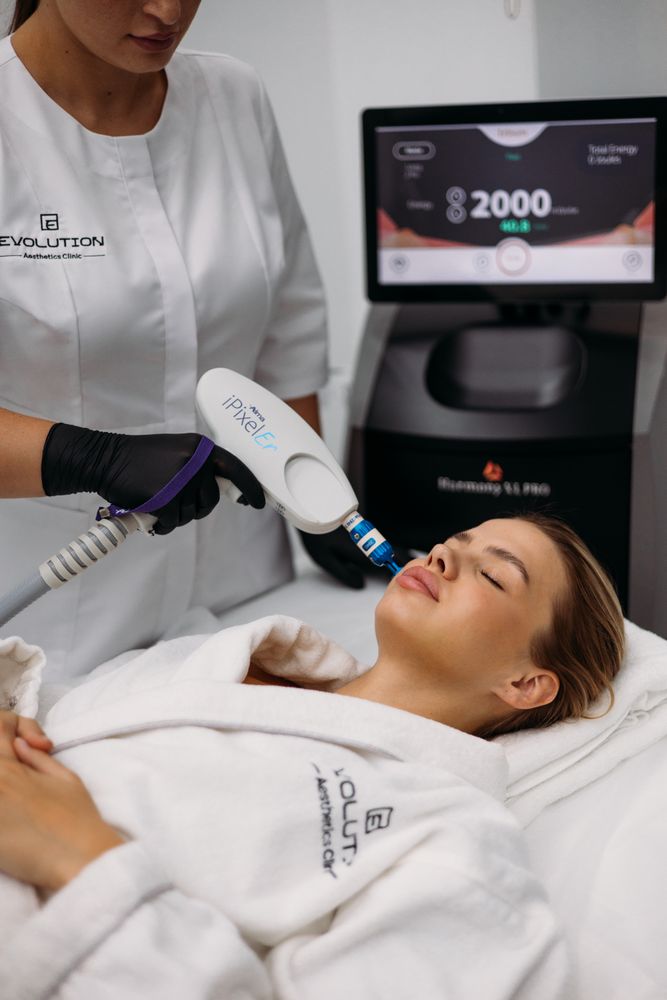
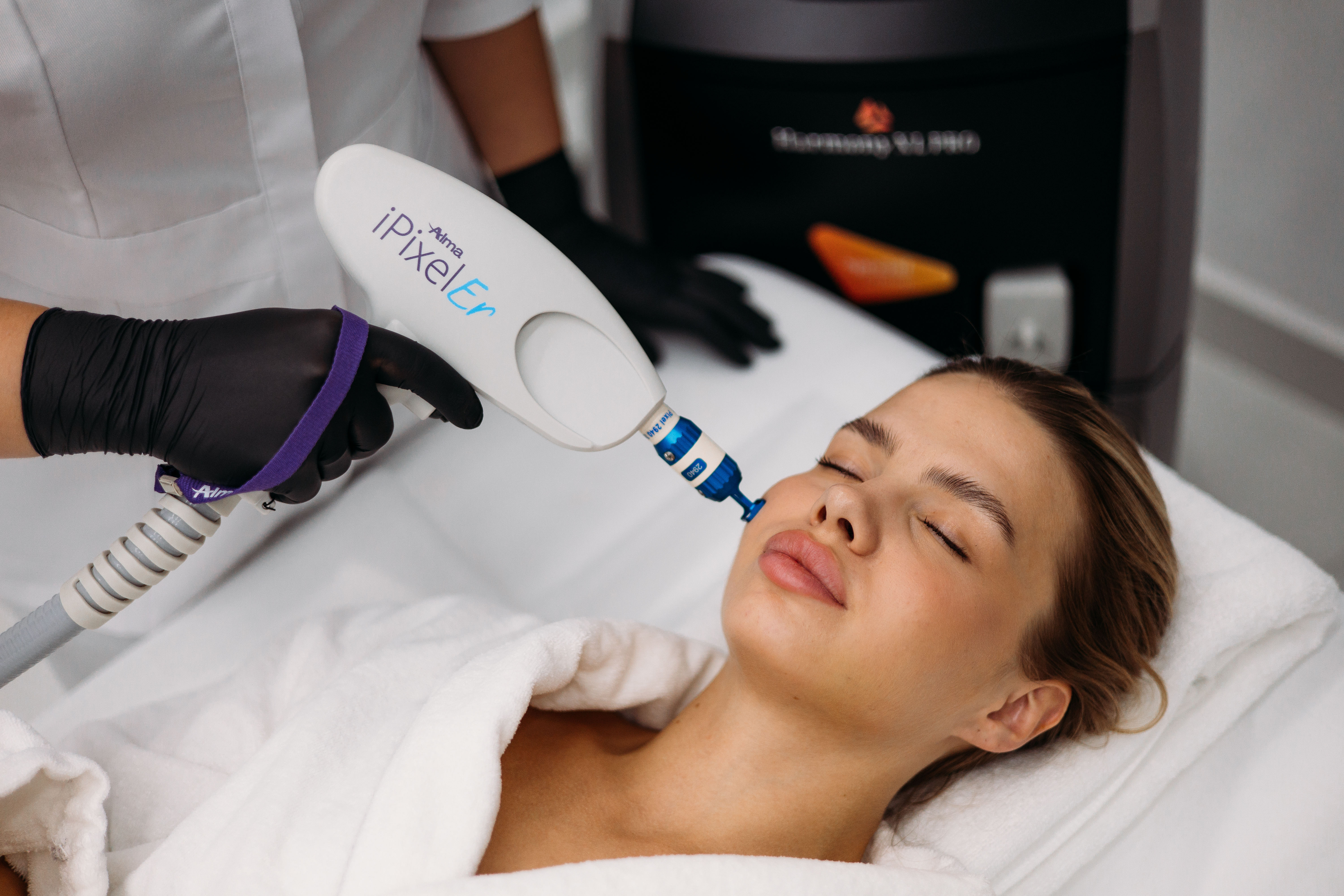
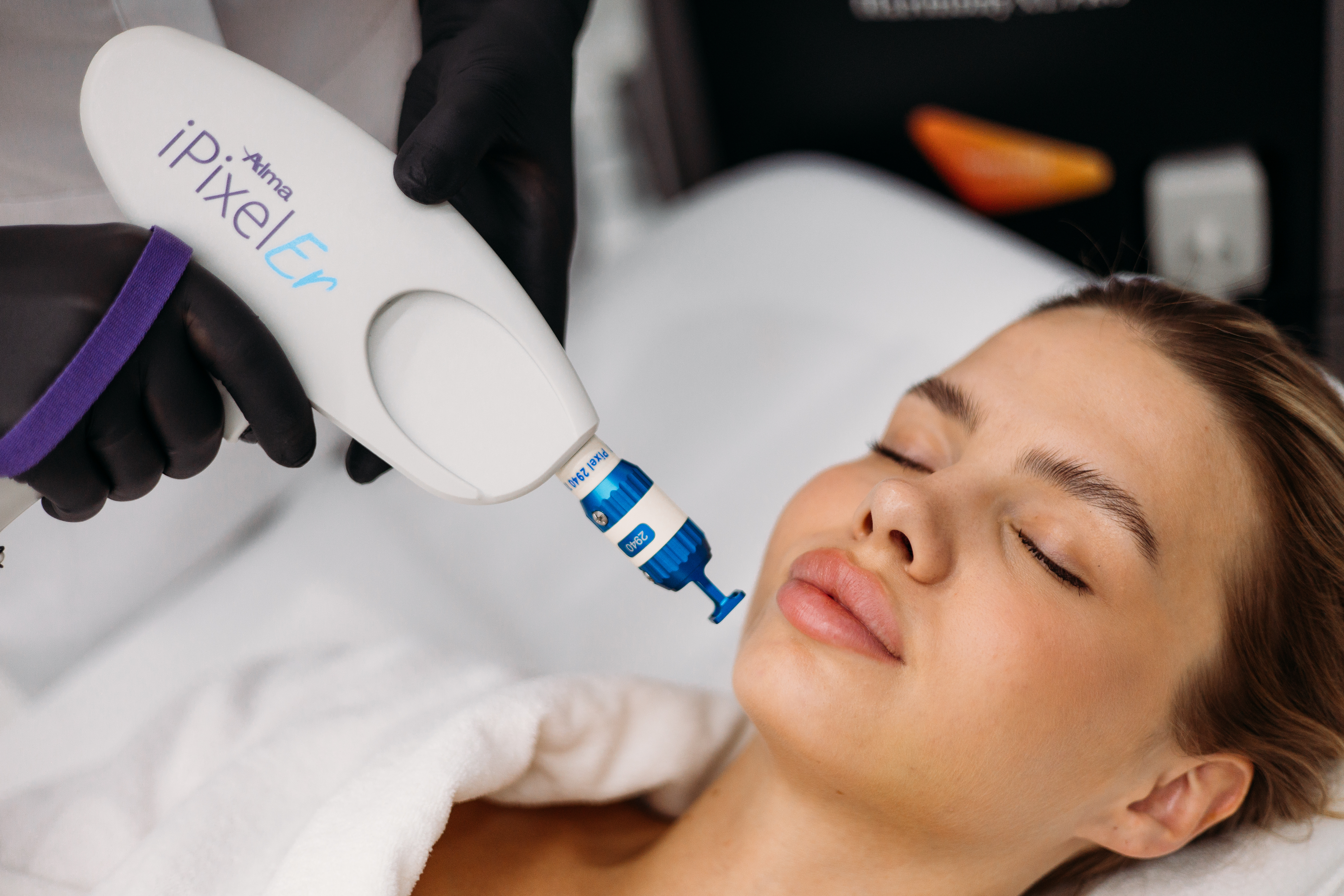
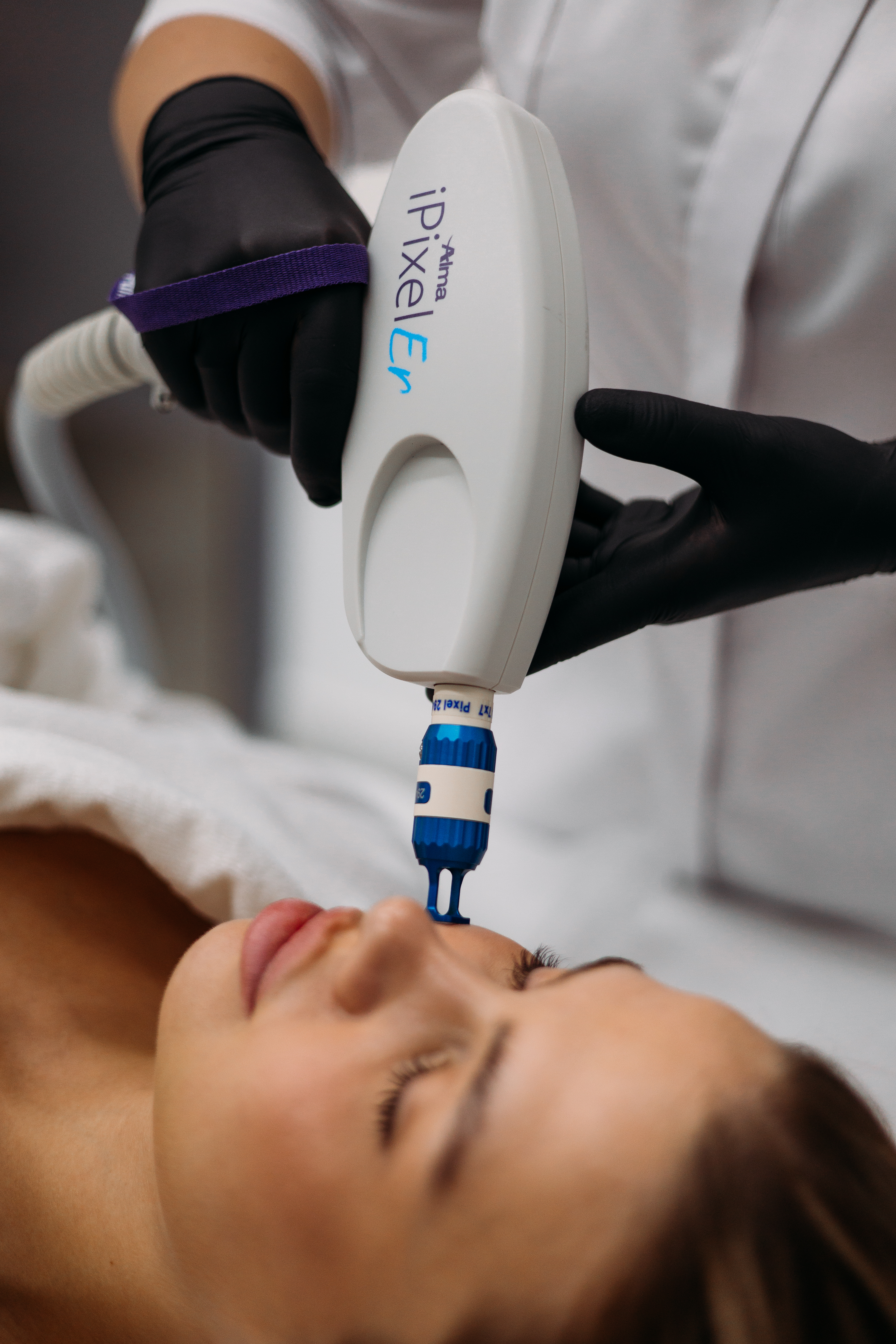
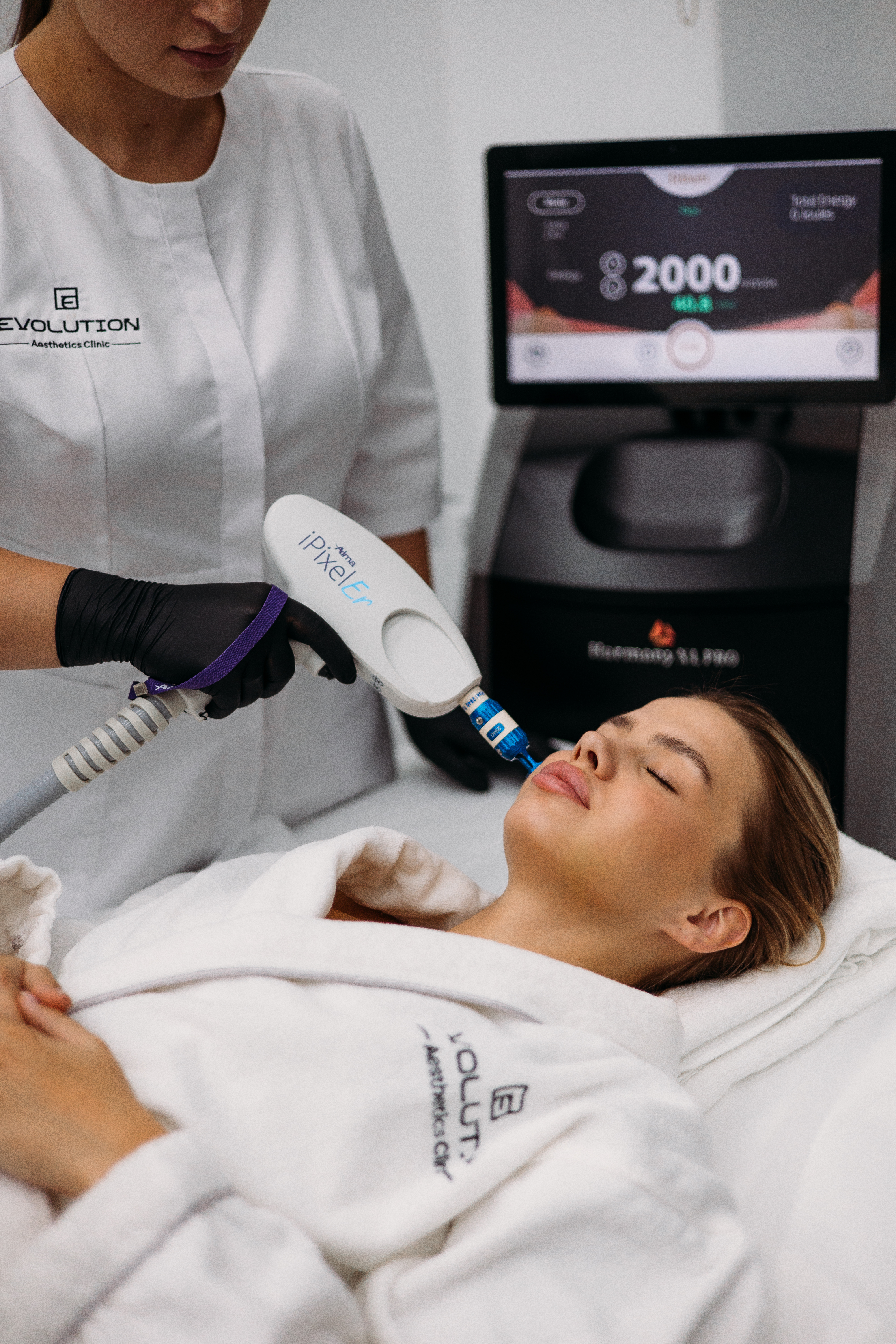
A model and the iPixel handpiece during Evolution’s clinic photoshoot. Recovery photographs below are a separate patient sequence.
Immediately after treatment and day 1
The first collage shows visible facial redness immediately after the procedure and on day 1. It records this patient’s early appearance, not the eventual resurfacing result. It should not be used to diagnose another person’s skin or decide whether a reaction is normal.
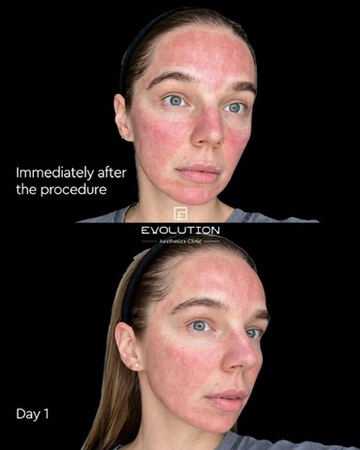
Top: immediately after the procedure. Bottom: day 1. Original patient collage, without retouching.
Follow the written instructions given for cleansing and the recommended protective products. After ablative resurfacing, the skin may be swollen, itchy and visibly changed in colour. Mayo Clinic’s general guidance also distinguishes early surface healing from full recovery; its timings cover a broad treatment category and are not a personalised iPixel timetable. Mayo Clinic on laser resurfacing
Days 2 and 3
The second collage documents days 2 and 3 for the same recovery sequence. The angle and lighting are not identical, so avoid using the pictures to calculate a percentage improvement or make a precise colour comparison.
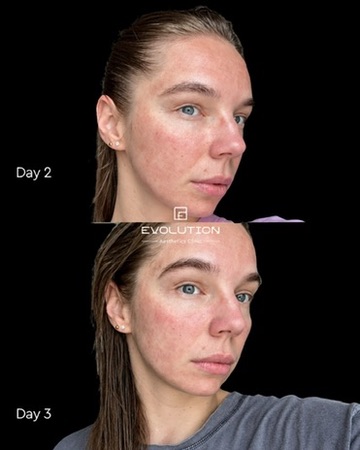
Top: day 2. Bottom: day 3. The photographs show this patient’s experience only.
Keep a simple record of what you notice and any questions for the clinic. If you send a photograph for advice, include the treatment date and symptoms rather than only the image. Do not use another patient’s photograph as a reason to change your prescribed aftercare.
Days 4 to 6 and the following weeks
In the third collage, redness appears less prominent by day 6 than in the initial images. That is an observation about these photographs, not evidence that every patient is healed or ready for makeup by day 6.
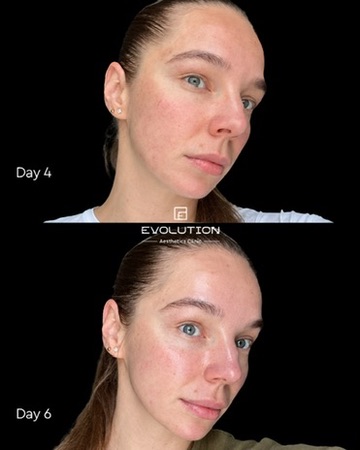
Top: day 4. Bottom: day 6. These are recovery images, not a pretreatment-to-final-result comparison.
Continue follow-up even when the surface looks calmer. For scar treatment, improvement can take months to become apparent. A later review addresses the treatment goal; an early review addresses healing. American Academy of Dermatology guidance on laser scar treatment
When can you wear makeup or restart skincare?
Use the products and washing routine advised by your clinician. The American Academy of Dermatology recommends waiting until your dermatologist allows makeup, using gentle care and protecting treated skin from the sun. Ask when sunscreen is appropriate for the healing surface and which product to use. Once suitable, broad-spectrum SPF 30 or higher is part of its general aftercare advice. AAD aftercare guidance
For outdoor plans in Dubai, discuss shade, transport and unavoidable exposure before treatment. A calendar full of beach visits or pool days may call for a different appointment date. Ask specifically when to restart active skincare products, exfoliating acids, exercise and swimming; do not treat reduced redness as automatic clearance.
Which symptoms need prompt advice?
Contact the clinic promptly for worsening pain, spreading redness, discharge, blisters, fever or a cold-sore outbreak. Eye pain or new visual symptoms need urgent medical assessment. These symptoms should not wait for the next routine photo update. Evolution’s safety and aftercare information
For the treatment itself, read how iPixel works. To plan an appointment around your circumstances, contact Evolution Aesthetics Clinic.