


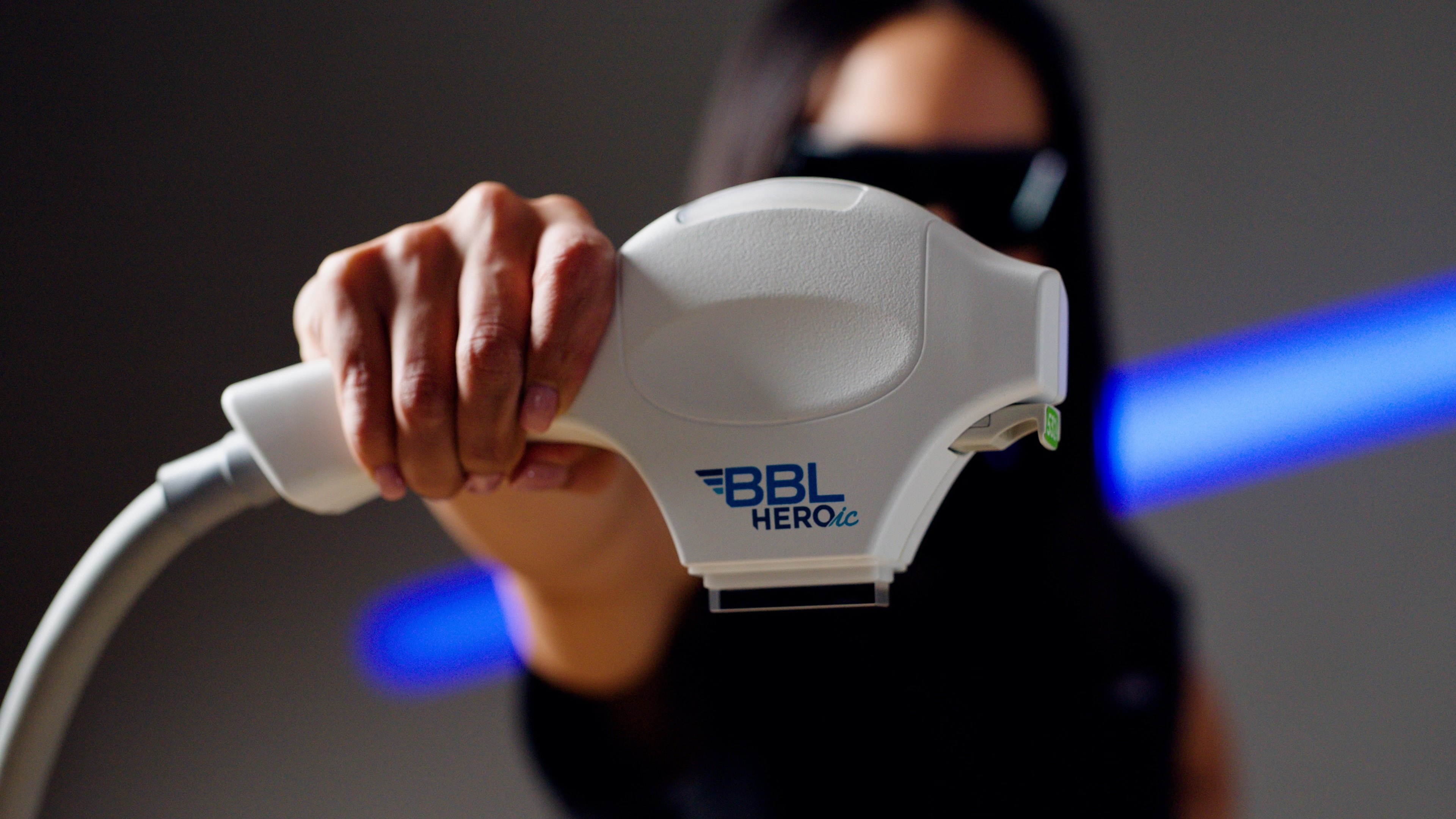
BBL HEROic is a non-invasive skin treatment that uses filtered BroadBand Light to address selected sun spots, redness and uneven skin tone. It combines Sciton’s light-based technology with motion tracking and automated pulse placement. The doctor selects the treatment settings according to your skin and the concern being treated.
At Evolution Aesthetics Clinic in Dubai, BBL HEROic is performed exclusively by doctors. This guide explains the procedure from the first assessment to recovery.
How does BBL HEROic work?
Light energy is absorbed by targets in the skin and converted into heat. For pigmentation and vascular treatments, those targets include melanin in brown spots and haemoglobin in small blood vessels. Filters help select the range of light used for the intended concern. DermNet’s explanation of intense pulsed light
HEROic adds a system that tracks handpiece movement and helps automate pulse placement. The technology supports delivery; the doctor remains responsible for deciding whether to treat and which settings to use. Our BBL and BBL HEROic comparison explains the upgrade in detail.
Is BBL HEROic a laser?
No. Although “BBL laser” is a common search phrase, BBL uses filtered, broad-spectrum pulsed light. A conventional laser uses a specific wavelength. Both can be used in aesthetic medicine, but the names are not interchangeable. Sciton’s BBL patient guide
Here, BBL means BroadBand Light skin treatment. It is unrelated to the surgical Brazilian butt lift, which shares the same abbreviation.
What can BBL HEROic treat?
Depending on the selected protocol and your suitability, treatment may address:
- Sun spots, age spots and selected superficial pigmentation.
- Certain visible small vessels and forms of facial redness.
- Uneven tone and aspects of skin texture.
- Acne with a dedicated protocol, where appropriate.
These applications are described in Sciton’s BBL HEROic overview. They are not all automatically included in one appointment. A treatment chosen for pigmentation should not be assumed to include a separate acne or skin-firming protocol.
Identifying the problem comes first. Brown patches can have different causes, and redness is not always rosacea. Our guide to melasma and hyperpigmentation explains why that distinction changes treatment planning.
What happens during the appointment?
1. Assessment and treatment planning
The doctor examines the area and discusses your goals, health history, previous procedures and recent sun exposure. Bring a list of medicines and skincare products. Explain any upcoming travel or events that could affect preparation and recovery.
Use this part of the visit to establish the exact area being treated. “Face” should not be assumed to include the neck or décolletage. Ask what the chosen protocol is intended to improve and how the response will be reviewed.
2. Skin preparation and eye protection
The skin is cleansed and protective eyewear is used. The doctor selects the appropriate settings before treatment begins. Tell the doctor if you are uncomfortable or have questions about any part of the preparation.
3. Light delivery
The handpiece delivers controlled pulses over the selected area. You may feel warmth or brief snapping sensations. Contact cooling helps with comfort, but the experience varies. Sciton describes these steps in its patient treatment guide.
4. Aftercare instructions
Before leaving, make sure you understand which skin changes to expect, when to restart active products and when to contact the clinic. Confirm whether a follow-up is planned. Appointment length includes more than the time spent delivering light, so ask about the full visit when arranging your schedule.
What is recovery like?
Many patients can resume ordinary daily activities soon afterwards. Temporary warmth, redness or swelling may occur, and treated brown spots can become darker before fading. Improvement develops over time rather than appearing as a finished result immediately. Sciton information on recovery
Follow your written aftercare. Use gentle skincare, protect the area from the sun and do not pick at darkened spots. Ask when to restart exfoliating products, retinoids, exercise and heat exposure. Broad-spectrum SPF 30 or higher forms part of Sciton’s aftercare guidance.
If you develop blistering, broken skin, significant pain or worsening symptoms, contact the clinic promptly. Burns, pigment changes and scarring are possible complications of light treatment. DermNet’s IPL safety information
Who needs extra assessment before treatment?
Recent tanning, darker skin, light-sensitising medicines and active skin problems can affect suitability. Tell the doctor if you are pregnant or breastfeeding, have a history of cold sores, or recently had another procedure. Do not stop prescribed medication on your own. The doctor may postpone treatment or recommend another approach. Evolution’s suitability guidance
How many sessions will I need?
There is no single course for every patient. Ask for an initial plan with a review point based on the concern and your response. For help evaluating that commitment, see whether BBL HEROic is worth it.
To discuss your skin and receive a personalised recommendation, book a consultation with Evolution Aesthetics Clinic.