

Treatment guides
Stretch Mark Treatment: What Can Improve Their Appearance?
Compare stretch mark texture treatment with colour camouflage, understand their limits, and decide what to discuss with a dermatologist.
Evolution Aesthetics Clinic

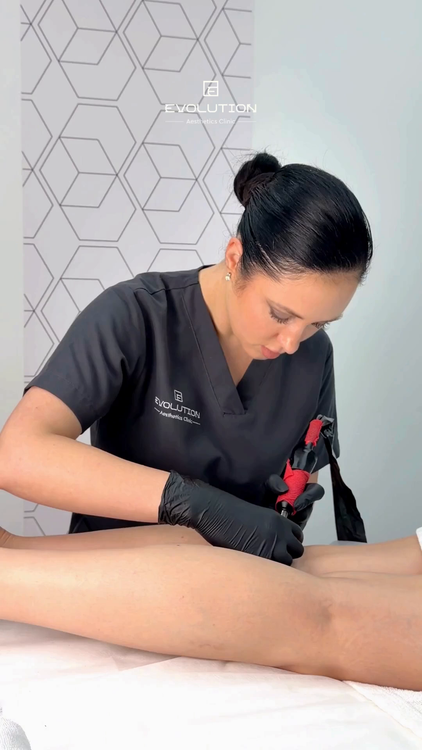
A pale stretch mark can be easy to see against the surrounding skin. Camouflage tattooing places selected skin-tone pigment into the mark to reduce that colour difference.
It is an option for mature, stable marks when colour is your main concern. The mark remains, including any indentation or change in texture. Our assessment checks the tissue and your usual skin tone before we discuss a pigment match.
key facts

Colour matching starts with the surrounding skin at its usual tone, without a recent tan or self-tan. A small test area may help check the pigment choice and local skin response.
Pigment is then placed in the agreed marks. Fresh colour can look stronger than the healed shade, so the review takes place after the skin and colour settle. That is when we can see which areas would benefit from refinement.
Questions
Mature, pale and stable stretch marks where colour contrast is the main concern. Red, purple, changing or unhealed marks need assessment before tattooing. There is no single age that makes every stretch mark ready.
No. It adds pigment to reduce the contrast with nearby skin. It does not replace the altered tissue or level a depressed mark. If texture bothers you more than colour, a different treatment may be more relevant.
Tattoo pigment does not tan like natural skin. If the surrounding skin darkens, the colour match can become more visible. Sun protection and avoiding tanning help keep the surrounding tone more consistent.
The area, tissue and pigment retention affect the number of visits. After healing, we review the colour match and any uneven areas to decide whether refinement would improve the blend.
No. Camouflage adds coloured pigment. Inkless needling does not add skin-tone ink and is a different method. Laser treatment also has a different role, typically aimed at texture rather than colour matching.
Removal can be difficult, and some cosmetic pigments darken under laser exposure. Keep your pigment details and tell future practitioners before any laser or light treatment over the area.
Treatment guides
Compare stretch mark texture treatment with colour camouflage, understand their limits, and decide what to discuss with a dermatologist.
At our clinic, this treatment is performed by the clinician below. Learn about their qualifications, area of practice, and role in your care.
Meet the full team
Beauty / Laser Therapist
Beauty / Laser Therapist at Evolution Aesthetics Clinic in Dubai. DHA License 26039880-002.
Meet SvetlanaIf your eye is drawn to a pale line against darker skin, reducing colour contrast may help. A depression or uneven surface is a texture concern and needs a different approach. Our stretch-mark treatment guide explains the roles of camouflage and other methods.
The surrounding skin provides the reference colour for pigment selection. A recent tan or self-tan can change that starting point. Sun protection helps keep the surrounding tone more consistent after tattooing.
Fresh pigment usually looks stronger than the settled shade. Healing shows where colour has held evenly and where refinement could improve the blend. Pigment may fade over time, so later changes can also be reviewed.
Pigment remains in the skin even when its colour fades. Keep a record of the pigment used and the treatment date for future care.
Tell a practitioner about the tattoo before laser or light treatment over the area. Some cosmetic pigments can darken under laser exposure, and removal may be difficult.
Tell us about allergies, medicines, healing problems and previous pigment. Open skin or infection needs care before tattooing. Keep prescribed medicine unchanged unless your prescriber advises otherwise.
Follow your cleansing and dressing instructions. Avoid picking, rubbing, soaking, swimming and excessive heat while the area heals.
Temporary soreness, bleeding, redness and swelling can occur. Risks include infection, scarring, allergy and uneven or misplaced pigment. Contact us for spreading redness, worsening pain, discharge, fever, persistent itching or delayed healing. Tell MRI staff about tattoo pigment if you need a scan.
Questions
Keep the area out of swimming pools and avoid soaking until the skin has healed. Follow the restart guidance in your aftercare instructions.
A patch or colour assessment can help check the local response and pigment match. Tell us about previous pigment reactions; delayed allergy remains possible.
After the skin has healed and the colour has settled. That is when we check the blend and consider any useful refinement.
Related reading
