

01
1 session
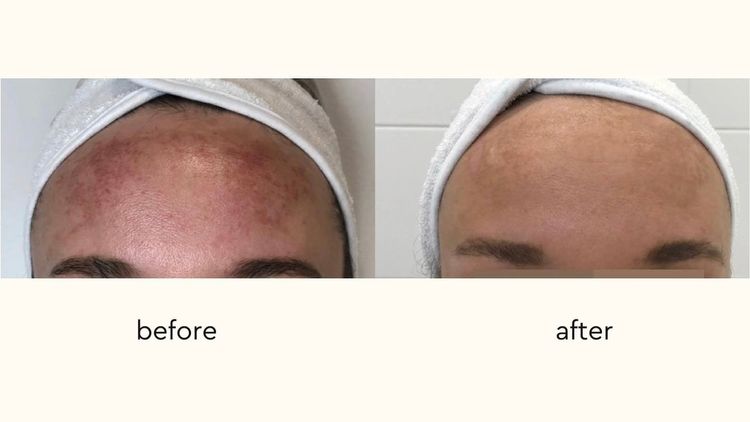
Calmer-looking forehead with less visible redness.
Evolution Aesthetics Clinic
Dull, uneven skin tone
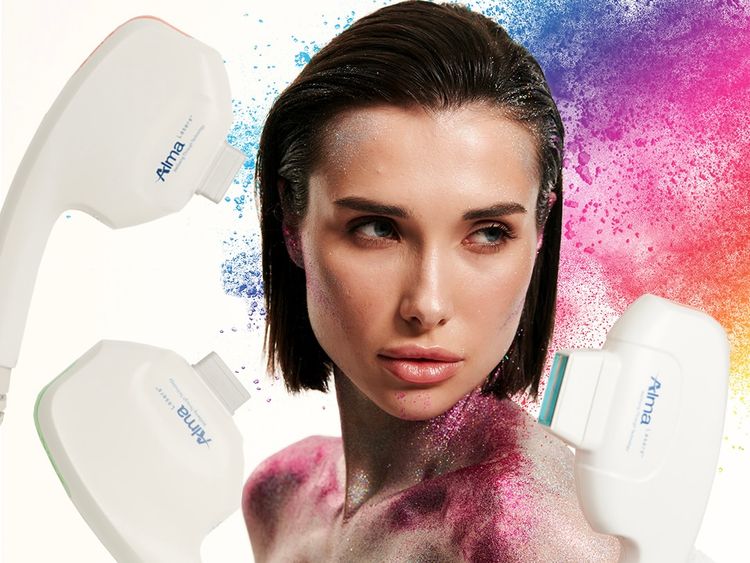
Glow Flow is an Alma protocol that runs three Harmony XL Pro light handpieces in one visit. Dye-VL narrow-band light is absorbed by haemoglobin in small vessels and by melanin in surface spots. Dye-SR narrow-band light targets pigment, and near-infrared (NIR) light warms the dermis to stimulate collagen.
It is a light treatment, not a laser or a peel: nothing is removed from the skin surface. It does not treat melasma, deep wrinkles or loose skin.
Our specialist dermatologists check your skin type, tan and medicines before choosing the settings.
key facts
A consultation decides whether light treatment suits your skin tone, recent sun exposure and the change you want.
Your appointment
We examine your skin, ask about sun exposure, medicines and previous treatments, and explain what light can and cannot change for you.
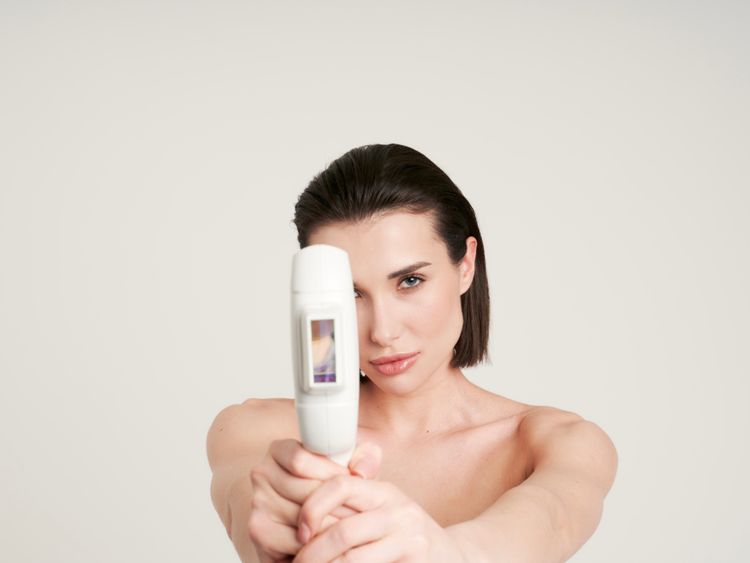
You wear eye protection. Your doctor applies cooling gel and passes the Dye-VL, Dye-SR and NIR handpieces over the face in turn. Each light pulse feels like a brief warm snap; the infrared step feels like steady warmth. A face session usually takes under an hour.
Skin is pink for a few hours. You can return to work the same day with sunscreen, and we give you written aftercare.
Real results
These photographs show individual patients after one or more sessions. Your result depends on your starting skin, the course you complete and how well you protect the skin from sun afterwards.
Individual results may vary.
Calmer-looking forehead with less visible redness.
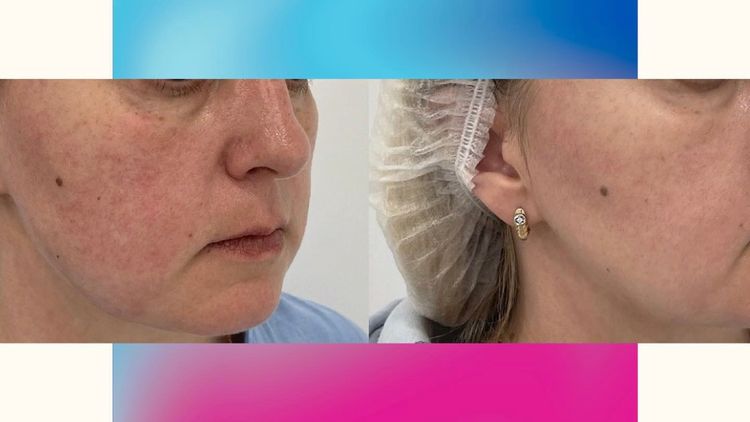
Brighter, smoother and more even-looking cheek and lower face.
Questions
No. Glow Flow uses three light handpieces: Dye-VL and Dye-SR emit narrow-band pulsed light, and NIR emits near-infrared light. None of them cuts or removes skin. If you also want a laser step for texture and fine lines, the No Filters protocol adds ClearLift, and ClearLift is available on its own.
Typical plans are four to six sessions, two to three weeks apart, because pigment and vessels clear gradually and new collagen forms over weeks. Many people see a brighter tone after the first visit. We compare photographs at each session and adjust the plan; how often you repeat later depends mainly on sun exposure.
Light is absorbed by melanin, so darker (Fitzpatrick IV–VI) or tanned skin has a higher risk of dark or pale patches. Dye-SR is the Alma handpiece designed for darker skin types, and we use lower settings and longer intervals. Recent sun, sunbeds or self-tanner mean we postpone the session.
It does not treat melasma reliably (light can make it worse), deep wrinkles, sagging jowls or active acne. For defined sun spots we assess IPL pigmentation treatment or White Gloss; for persistent redness or rosacea, the dedicated redness protocol; for loose skin, tightening treatments. We tell you which page applies before you book.
Pinkness and warmth for a few hours are usual. Small sun spots often darken and then flake off over about a week; that is expected, so do not pick them. Blistering or crusting is uncommon and needs a message to us. Make-up can go on the next day.
Glow Flow is three light steps: Dye-VL, Dye-SR and NIR. No Filters adds a fourth, the ClearLift Q-switched laser, for texture and fine lines, and takes longer per visit. Choose Glow Flow when tone, mild redness and glow are the main concern; choose No Filters when texture and fine lines also matter.
Our specialist dermatologists perform every energy-based treatment themselves, within their licensed scope and clinical privileges.

Specialist Dermatologist
Medical Director of Evolution Clinic, Specialist Dermatologist from Russia, M.D., Official Trainer for Laser Technologies. DHA License 03624607-001
Meet Yulia
General Practitioner
General Practitioner at Evolution Aesthetics Clinic in Dubai. DHA License 39929792-001.
Meet VeraDye-VL is a narrow-band pulsed-light handpiece (Alma quotes a 500–600 nm band) using Alma's AFT filtering. Its light is absorbed by oxyhaemoglobin in fine facial vessels and by melanin in sun spots, and reflected by lighter, healthy tissue. The absorbed energy heats the target for milliseconds: small vessels close and shrink, and pigment breaks into fragments that rise to the surface and flake off over days. This is the same handpiece we use alone in our rosacea and redness treatment.
Dye-SR uses a slightly longer narrow band (550–650 nm). Alma describes it as suited to darker skin types because less energy is taken up by background melanin, which lowers the risk of unwanted dark or pale patches. In Glow Flow it follows Dye-VL and completes the pigment step across the whole face.
NIR is a near-infrared light source absorbed by water rather than colour. Instead of single flashes, the doctor keeps the handpiece moving until the dermis reaches a set temperature and holds it there for a few minutes. Heat makes existing collagen contract slightly and triggers new collagen formation over the following weeks. Published work on broadband infrared light shows a modest, measurable improvement in laxity after one to three treatments; it is a firmer-looking finish, not a lift.
Each handpiece targets a different chromophore: haemoglobin, then melanin, then water. Treating vessels before pigment and finishing with infrared lets the doctor use lower energy at each step than a single broad-spectrum IPL pass would need. Pigment and vessel changes are visible within one to two weeks; the collagen response develops over six to twelve weeks, which is why the result keeps improving after the last session.
In a blinded split-face trial of pulsed light, telangiectasia and irregular pigmentation improved for up to nine months after three sessions, while wrinkles did not. That matches what we tell patients: expect a clearer, more even complexion and a subtle firming; do not expect wrinkle removal or a facelift effect.
If your concern is a few defined sun spots or freckling on the cheeks rather than overall dullness, a single-purpose session on our IPL pigmentation page may be the better fit. White Gloss is the Alma protocol for pigment combined with rejuvenation. Melasma is different: it is hormonally driven and can darken after light treatment, so we assess it separately. Our guide melasma vs hyperpigmentation explains the difference.
Glow Flow includes one Dye-VL pass for mild diffuse redness. Persistent flushing, visible vessels around the nose or diagnosed rosacea need the dedicated rosacea and redness treatment, where the whole session is planned around vessels.
No Filters is Glow Flow plus a ClearLift Q-switched laser pass, which adds a photoacoustic effect under the skin surface for texture and fine lines. ClearLift alone suits people whose main concern is texture and early lines without pigment or redness. For loose skin only, the NIR infrared tightening session uses the infrared step on its own.
A HydraFacial or deep cleansing facial removes surface build-up so light reaches the skin evenly; we schedule it several days before or after a Glow Flow session, not on the same day, because both steps stress the skin barrier. LED therapy can follow a session to calm redness. We plan these combinations at your consultation rather than adding them on the day.
The protocol can be extended to the neck and décolleté, where sun damage often shows as mottled pigment and redness. Skin there is thinner and heals more slowly, so we use lower settings and assess these areas separately from the face.
Bring your skincare product list so we can confirm what to pause and when to restart. Do not stop prescribed treatment without your prescriber’s advice.
We photograph your skin before every session and compare progress with you. A typical plan is four to six sessions two to three weeks apart; we shorten or extend it according to how pigment and vessels respond. Alma's protocol suggests repeating a short course about twice a year, but we decide that at review, after a season of sun, not in advance. New sun spots and vessels form with sun exposure, so daily sunscreen protects your result longer than any extra session.
Evolution Aesthetics Clinic holds DHA Polyclinic License 6000514. Our Alma Harmony XL Pro is an original device bought through the official UAE distributor, and every energy-based treatment is performed by our specialist dermatologists, not delegated to technicians. We explain the handpieces, expected result, risks, alternatives and total price before you consent, and we are happy to show the device paperwork.
Redness, warmth and mild swelling for a few hours to two days are common. Treated pigment darkens before it flakes away. Bruising can occur in a minority of patients, and a mild sunburn-like feeling may last a few days. Less common effects are blistering, crusting, and darker or paler patches that can take months to fade; these are more likely on tanned or darker skin. Scarring is rare. Light can damage the eyes, so you wear protective eyewear throughout and we do not treat inside the orbital rim.
Message us the same day if you develop blisters, crusts, severe pain, spreading redness, a cold-sore outbreak or signs of infection. Do not treat these yourself with acids or another clinic's session; an early reaction needs assessment first.
We postpone Glow Flow during pregnancy and breastfeeding, over active skin infections, open wounds or inflamed acne, and on recently sunburnt, tanned or self-tanned skin. A history of skin cancer or a suspicious lesion in the area needs medical clearance first. Photosensitising medicines require a review of timing. Light-triggered epilepsy, a tendency to keloid or hypertrophic scars, uncontrolled diabetes or an autoimmune flare, and recent peels, lasers or filler in the same area without a proper interval also need review. Licensing and an original device are firm standards; they do not remove these risks.
Questions
Yes, if your skin is untanned and you commit to daily SPF 50 and shade for two weeks either side of each session. If you have just returned from the beach or a sunbed, we postpone until the tan has faded, because tanned skin absorbs more of the light.
Usually yes. Skin looks pink for a few hours, like mild sunburn, and small pigment spots may look darker for a few days. Wear sunscreen, skip heavy make-up until the next day and avoid heat and hard exercise for 24 hours.
Plan the course to finish two to three weeks before the event, so any flaking spots have cleared and the collagen response has started. With sessions two to three weeks apart, that means starting three to four months ahead. A first session close to the date leaves no time to assess your response.
Stop glycolic, lactic and salicylic acids, benzoyl peroxide and hydroquinone a few days before and for three to five days after. These raise irritation and pigment risk while the skin heals. Keep using a gentle cleanser, a ceramide or hyaluronic acid moisturiser and SPF 50.
Related reading
Other Alma Harmony treatments we offer and the manufacturer and medical references used for this page.
